← Back to Blog


B2B buyers decide before sales gets a call. Here's how to market for that.
TL;DR: B2B marketing is everything a company does to get other businesses to know it, trust it and choose it as a supplier, across several decision-makers and a long sales cycle. In 2026 most of that work happens before a salesperson is involved: Gartner found 67% of B2B buyers prefer a rep-free buying experience, and the Ehrenberg-Bass Institute estimates only about 5% of potential buyers are in market in any given quarter. Effective B2B marketing is therefore built as a system with five parts: positioning, content, distribution, automation and measurement.
Two out of three B2B buyers would rather finish a purchase without talking to a sales rep. That's the headline from a Gartner survey of nearly 650 buyers published in March 2026, and I think it's the most useful working definition of B2B marketing you'll find: everything a buyer needs to know about you to pick you, delivered while nobody from your team is in the room.
I'm Hanita Yudovski. I run LinkedIn marketing programs for B2B companies, and for some CEOs I also ghostwrite their posts. That gives me a strong opinion about where B2B marketing should happen, plus a commercial interest, so read this guide with both in mind. It covers the definition, how companies buy today, the five parts of a working system, a four-step starting plan, and who should run it.
What is B2B marketing?
B2B (business-to-business) marketing is the marketing of products or services from one company to another. Its job is to build awareness and trust with the decision-makers inside a target account and turn that trust into sales conversations and closed deals over time.
A cybersecurity vendor selling to CISOs does B2B marketing. So does an accounting software company selling to mid-size firms, and a law firm courting tech companies, even if the partners there call it "business development."
How B2B marketing differs from B2C
The first difference is headcount. A consumer purchase usually has one decision-maker. A company purchase pulls in finance, operations, the people who will actually use the product and sometimes legal. The 2025 Edelman-LinkedIn B2B Thought Leadership Impact Report, based on nearly 2,000 management-level professionals, found that more than 40% of B2B deals stall because of internal misalignment among those people.
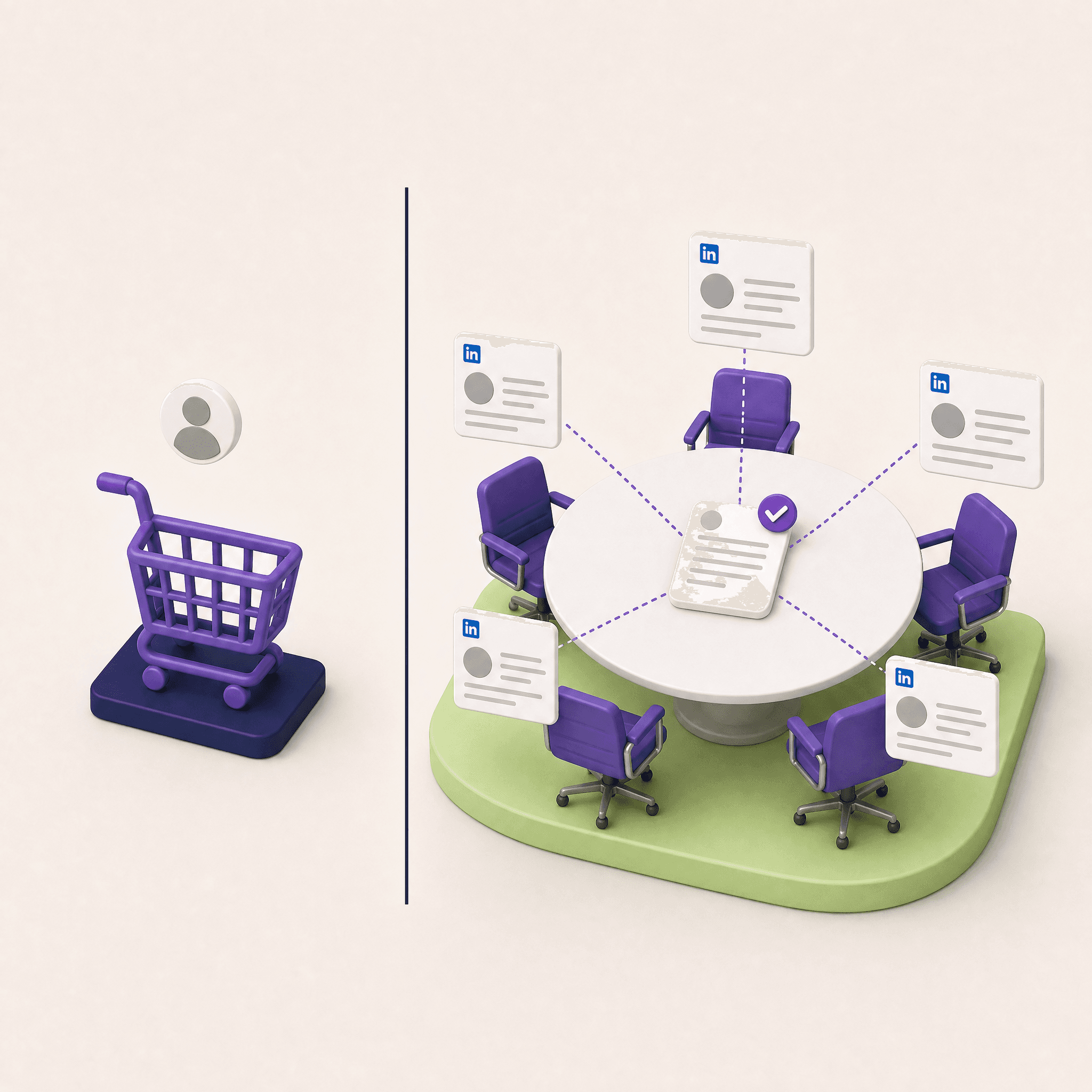
The second is time. Professor John Dawes of the Ehrenberg-Bass Institute points out that companies switch providers of services like banking, legal advice or software roughly every five years. That puts about 20% of them in market in a year and about 5% in a quarter. LinkedIn's B2B Institute calls it the 95:5 rule.
The third gets talked about less: personal risk. A bad consumer purchase is annoying. A bad vendor pick can cost the person who recommended it their credibility with leadership, which is why buyers so often shortlist the names they already recognize.
How B2B buying works in 2026
The same Gartner research found that 45% of buyers used AI during a recent purchase. The questions that used to come up on a discovery call now get asked to ChatGPT, Google and the LinkedIn feed, often weeks before anyone fills in a form.
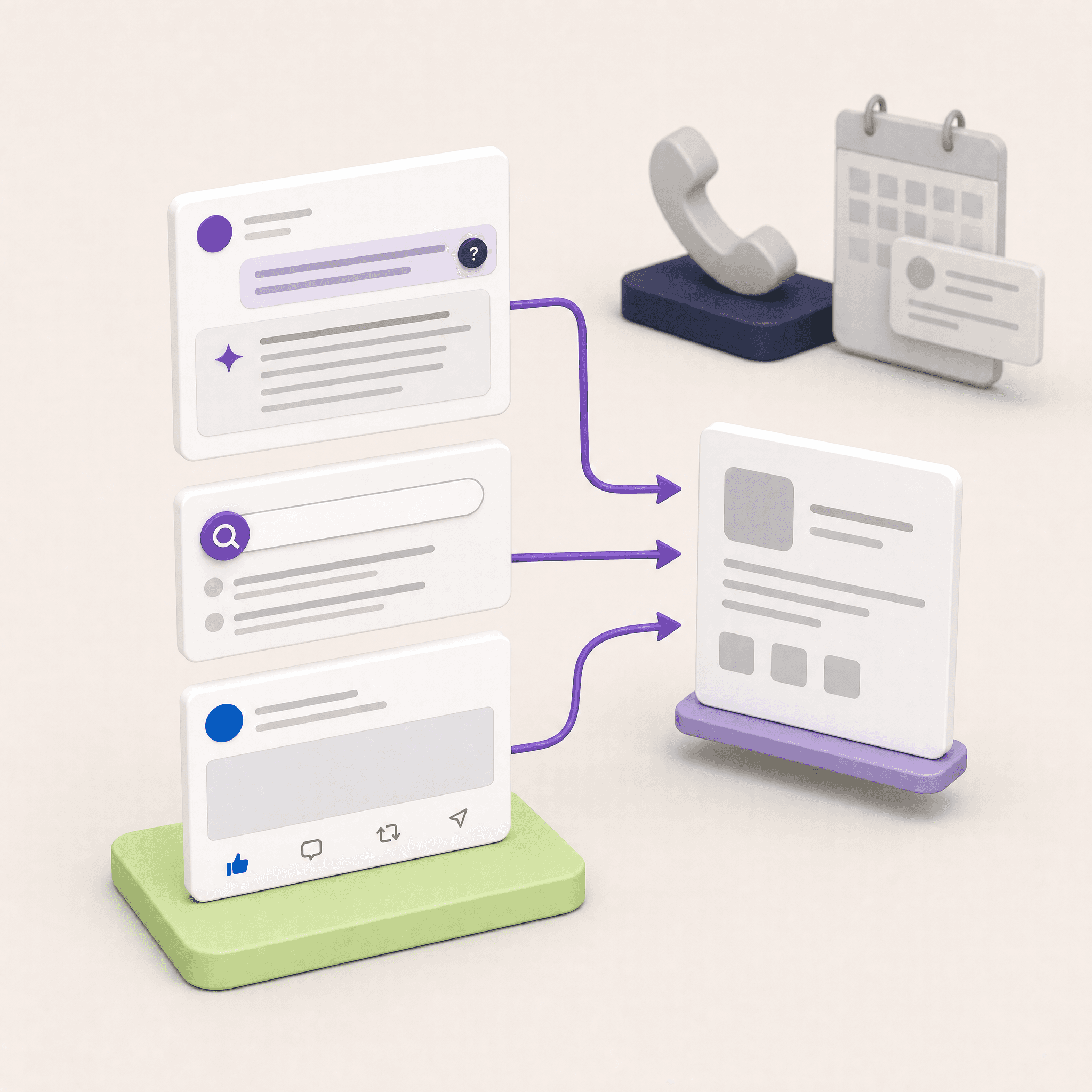
And the people doing that research include more than your official contact. According to the Edelman-LinkedIn report, 63% of "hidden buyers" (people who shape the decision without joining sales calls) spend more than an hour a week on thought leadership, and 79% of respondents said they're more likely to champion a vendor in an RFP if it publishes quality thought leadership consistently.
So a large share of the selling now happens through your content and reputation, before your sales team knows a deal has started.
The five parts of a B2B marketing system
Here's what a complete B2B marketing system looks like:
Positioning and ideal customer → content that answers decision-makers' real questions → distribution through one channel you actually run well → automation and a CRM that connect marketing to sales → measurement that feeds decisions back into positioning.
When I first drafted that chain, content came first, because that's where most companies start. Then I moved it. Without positioning (a sharp answer to "who are we best for, and why?"), content comes out correct and polite, written for everyone, and nobody saves it. When the answer is a closed list of named companies, positioning turns into account-based marketing (ABM).
Distribution is the part that gets skipped. Teams invest in an article, publish it on the blog, wait, then scatter it across four networks with no plan. I wrote about that pattern in why most B2B companies waste money on social media. In my experience one channel run seriously for two quarters beats four channels run on and off.
Automation is what keeps a lead that arrived on Tuesday from going cold by Friday. A handful of well-connected tools is enough, and here's the marketing automation stack you actually need in 2026.
Measurement closes the loop: what got saved, who came back to the site, which meetings started from content, and what all of that changes about positioning next quarter.
B2B content marketing: where it gets stuck
B2B content marketing is creating and distributing content that helps decision-makers understand a problem and choose a solution. Nearly everyone is doing it. In the Content Marketing Institute's research for 2026, a survey of 1,015 B2B marketers, 96% said their organization creates thought leadership, and LinkedIn ranked as the most effective channel for distributing it at 76%.
Where does it stall? The top challenge marketers named, at 40%, was creating content that prompts a desired action such as a conversion. Third, at 33%, was measuring content effectiveness.
My take is that those are the same problem. Teams ask content written for the 95% who aren't buying to convert like an ad aimed at the 5% who are, and when it doesn't, they conclude content doesn't work. Content for the wider market should be judged on earlier signals (saves, sends, profile views from your target accounts). I laid out a four-rung measurement ladder in the LinkedIn B2B marketing playbook.
Why LinkedIn sits at the center of my system
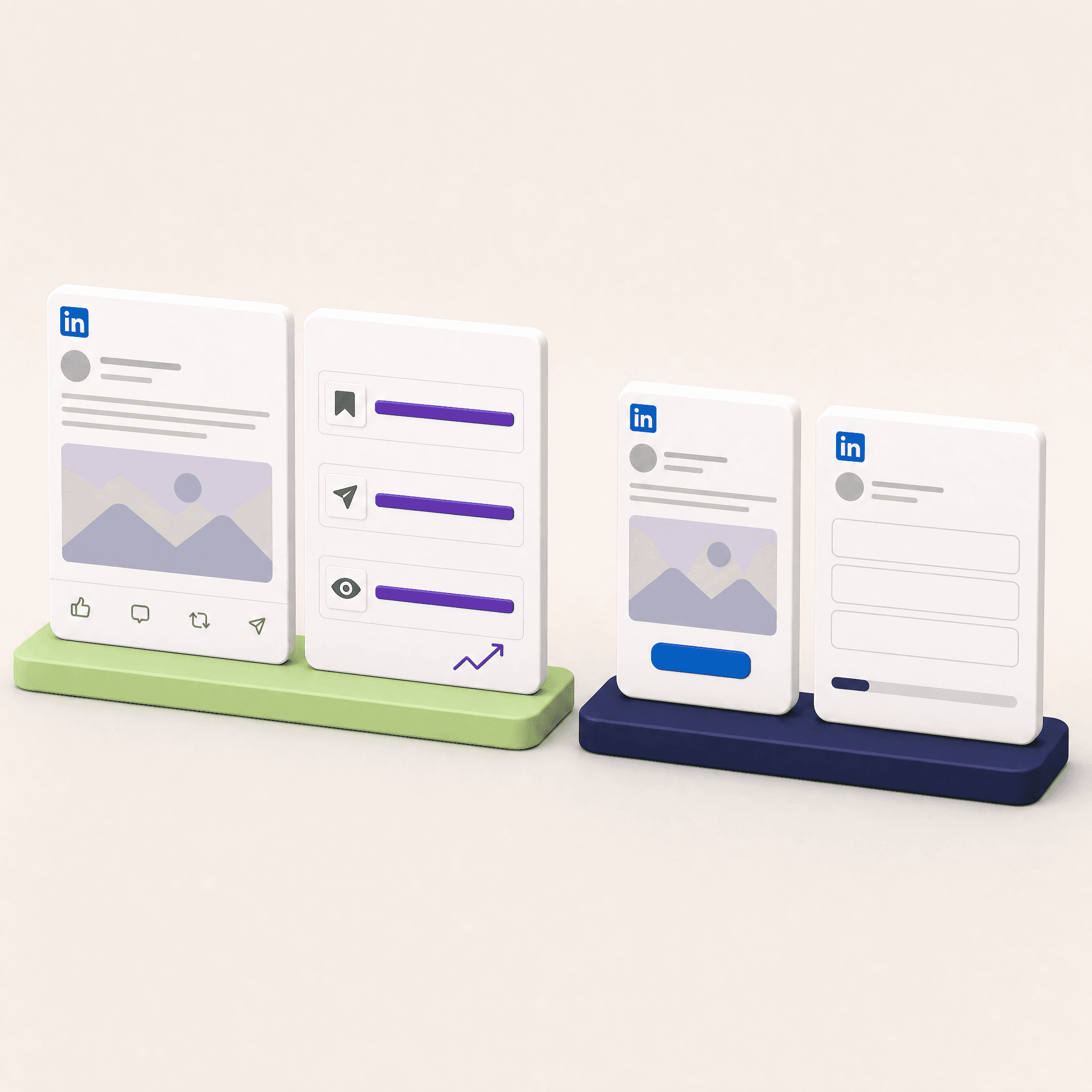
Decision-makers read there, and it's the one place you can run three assets at once: the CEO's profile, the company page and employees' profiles. A CEO post that answers a real question reaches the finance lead who'll sit in the buying meeting next year, and an engineer's post from the same company reaches people the company page never will.
The strongest objection is fair: some B2B audiences barely use LinkedIn. A company selling kitchen equipment to restaurant owners will find them through distributors, trade shows and messaging groups. So the first strategic question is where your decision-makers actually read. For tech, SaaS and professional services, the answer points to LinkedIn almost every time.
B2B marketing strategy: where to start
Strategy is mostly a decision about what you'll stop doing. For a small team, four steps are enough to begin:
Write one sentence on who makes the decision at your customer and what scares them about picking a new vendor.
Collect the ten questions sales hears most often and turn them into next quarter's content list.
Choose one distribution channel and commit to it for two quarters.
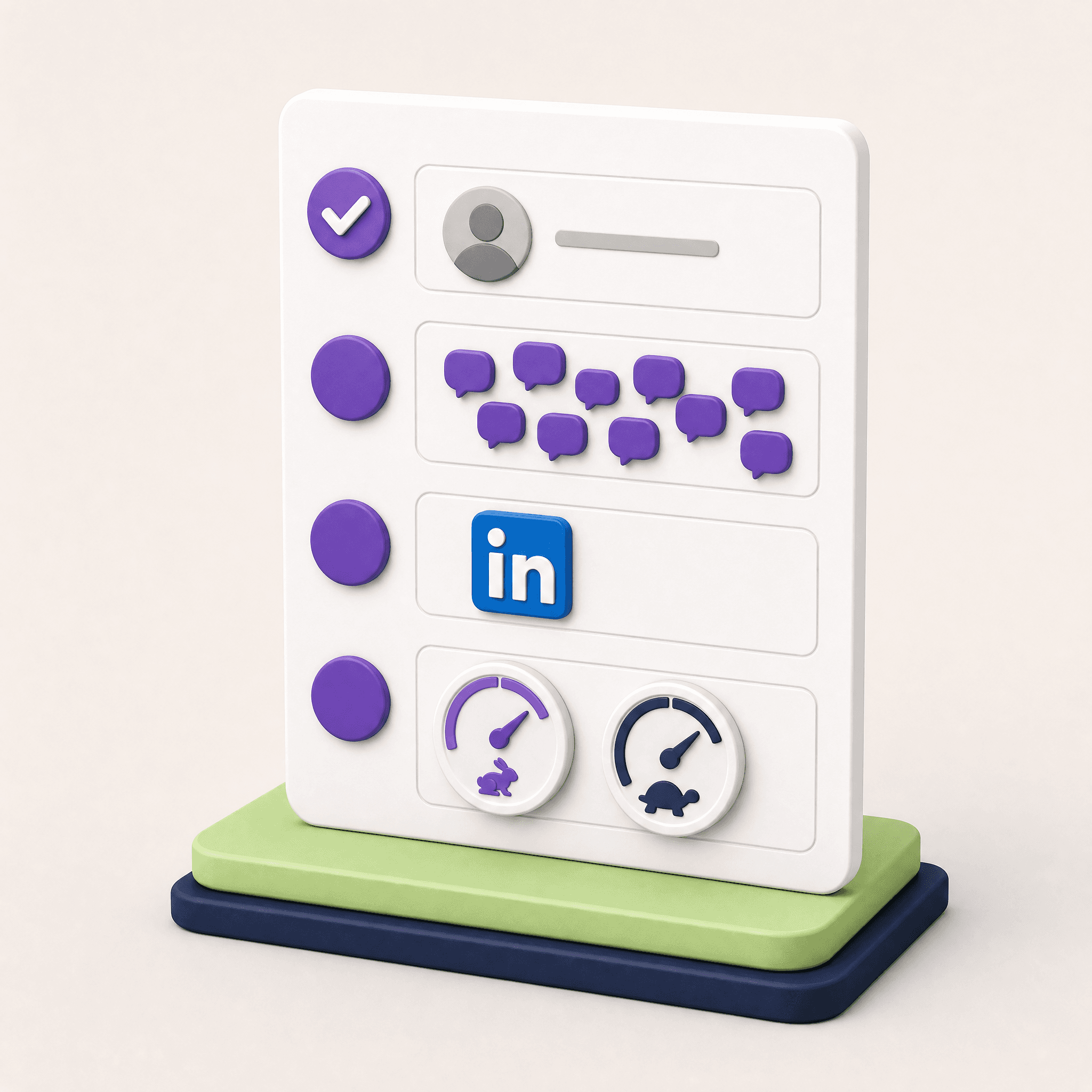
Set one fast metric (saves, for example) and one slow metric (meetings that started from content), and review both monthly.
Who should run it?
An in-house team works best when someone has real time and owns the company's voice. An agency fits when most of the work is execution at volume, such as paid campaigns. A fractional CMO makes sense when you need strategy and execution in the same hands, with no handoff between them. That's exactly the service I sell, so weigh my recommendation accordingly.
Bottom line
B2B marketing in 2026 is a system that does much of the selling before anyone from your company joins a call, so build it in order: positioning, content, distribution, automation, measurement. This week, start with the cheapest step: ask your sales team for the ten questions they hear most, and write your first post on the one at the top.
And if 95% of your buyers aren't buying this quarter, what will they find when they ask ChatGPT about you?
FAQ
What is B2B marketing?
B2B marketing is the marketing of products or services from one business to another. It builds awareness and trust with the decision-makers inside target accounts and turns that trust into sales conversations and deals, usually over a sales cycle of several months.
What is the difference between B2B and B2C marketing?
B2B purchases involve several decision-makers, longer sales cycles and higher personal risk for whoever recommends the vendor. According to the Ehrenberg-Bass Institute, only about 5% of potential B2B buyers are in market in any given quarter.
What is a B2B marketing strategy?
A plan that defines who makes the buying decision, what content answers their questions, which channel distributes it and how results are measured. For a small team it starts by committing to one distribution channel for two quarters.
What is B2B content marketing?
Creating and distributing content that helps business decision-makers understand a problem and choose a vendor. In the Content Marketing Institute's 2026 research, 96% of B2B organizations create thought leadership, and 76% ranked LinkedIn as the most effective channel for it.
Which channel works best for B2B marketing?
The one where your decision-makers read. For tech, SaaS and professional services that's usually LinkedIn. In industries like restaurant equipment, distributors, trade shows and messaging groups can work better.
How long does B2B marketing take to show results?
Fast signals such as saves and profile views move within weeks, while deals take quarters. With only about 5% of potential buyers in market in a given quarter, most will meet your content long before they start looking for a vendor.
Written by Hanita Yudovski, who runs LinkedIn programs for B2B companies, from the CEO's profile to employee advocacy, and helps independent professionals build their LinkedIn presence. LinkedIn is where she works every day, with AI agents and tools she builds herself. Updated September 2026. Written with AI tools, human strategy and human editing.
Sources: Demand Gen Report: Gartner, 67% of B2B buyers prefer a rep-free experience · Ehrenberg-Bass Institute: 95% of B2B buyers are not in market · LinkedIn B2B Institute: the 95:5 rule · Demand Gen Report: 2025 Edelman-LinkedIn B2B Thought Leadership Impact Report · Content Marketing Institute: B2B trends for 2026