← Back to Blog

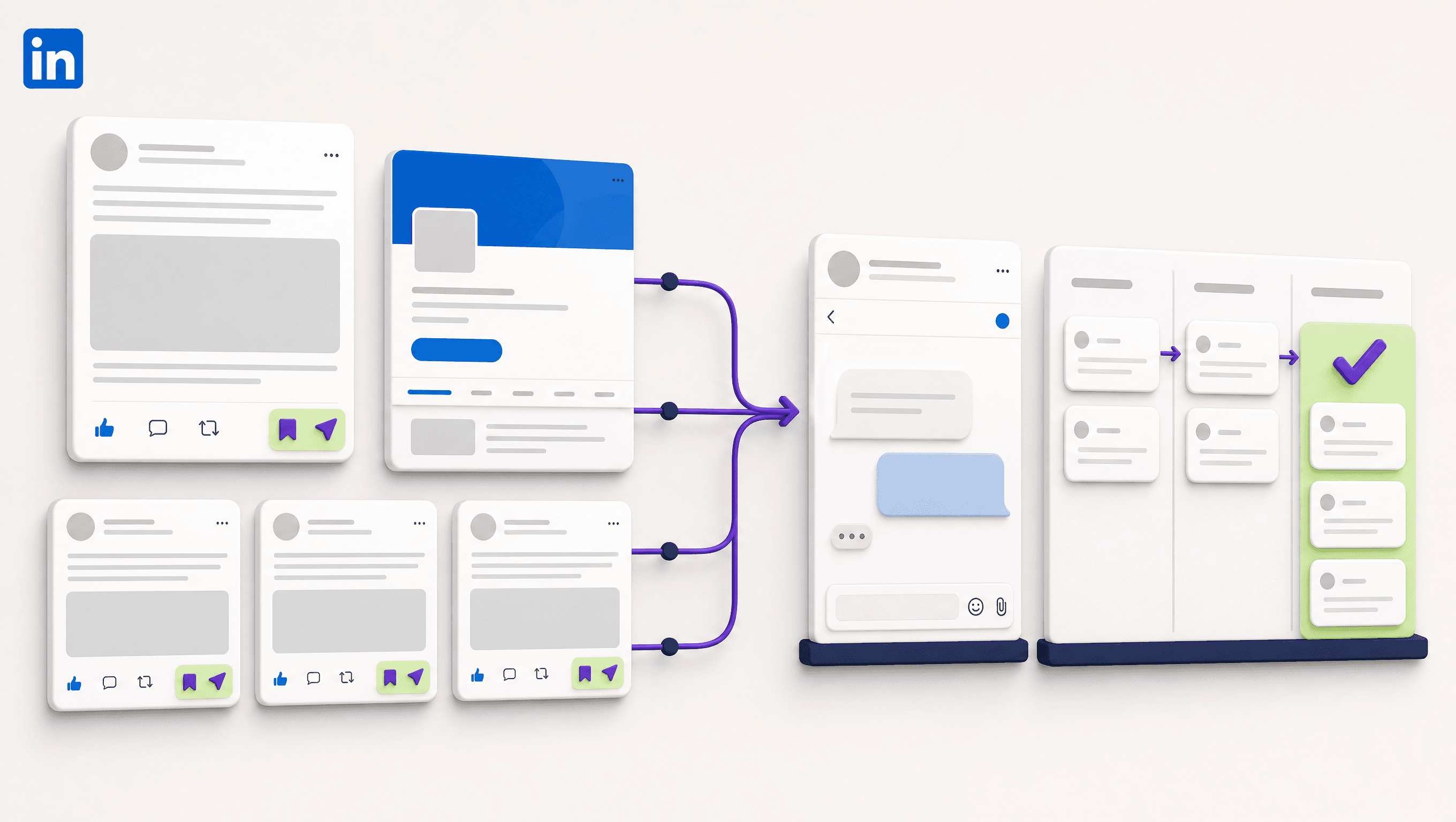
LinkedIn pipeline comes from a system, and that system is measured in quarters.
TL;DR: LinkedIn B2B marketing is the systematic management of three assets (the CEO's profile, the company page and employees' profiles) plus paid amplification and measurement, so the buying group already knows and trusts you before they start looking for a vendor. Research by the Ehrenberg-Bass Institute, promoted by LinkedIn's B2B Institute, puts only about 5% of potential buyers in-market in any given quarter, so the system is judged in quarters. In 2026 LinkedIn reported a 46% rise in detected inauthentic activity, which makes real people with real opinions the asset that keeps reach.
Here is how most B2B companies run LinkedIn: a company page, three posts a week, a photo from the last conference, and once a quarter someone on the leadership team asks why none of it produces leads.
I'm Hanita Yudovski. I run LinkedIn programs for B2B companies at OctaLoom, from the CEO's profile to employee advocacy, and for some CEOs I also ghostwrite the posts. So I have an obvious interest in this topic, and you should read the playbook knowing that. What you'll get: how the system is built, what changed in 2026, and how to measure it on a four-rung ladder.
What is LinkedIn B2B marketing?
LinkedIn B2B marketing is the planned management of a company's presence on LinkedIn through three assets (the founder or CEO profile, the company page, and employees' personal profiles), supported by paid promotion, with one goal: build trust with decision-makers over time and convert it into sales conversations when they're ready to buy.
In practice that takes four things: a strategy, a steady cadence, clear roles and measurement. A company posting without all four is doing LinkedIn activity, and activity disappears from the feed in about two days.
Why LinkedIn, and why the math rewards patience
Start with the uncomfortable number. According to LinkedIn's B2B Institute, drawing on Professor John Dawes of the Ehrenberg-Bass Institute, most of your potential buyers are out of market at any given moment. Dawes explains that companies switch service providers roughly every five years, which means about 20% are in market in a year and about 5% in a quarter. Hence the name, the 95:5 rule.
What does that do to your content? Every post that ends with "book a demo" is talking to 5% of the audience while the other 95% scroll past. And when one of them enters the market next year, they call the company they already recognize.
The second part of the math is the buying group. The 2025 Edelman-LinkedIn B2B Thought Leadership Impact Report, based on nearly 2,000 management-level professionals, found that more than 40% of B2B deals stall because of internal misalignment in the buying group. The "hidden buyers" (people who shape the decision without ever joining a sales call) read a lot: 63% spend more than an hour a week on thought leadership, and 79% of respondents said they're more likely to champion a vendor in an RFP if that vendor publishes quality thought leadership consistently.
Marketers have already voted, too. In the Content Marketing Institute's 2026 trends research, a survey of 1,015 B2B marketers, LinkedIn ranked as the most effective distribution channel for thought leadership at 76%, far ahead of email newsletters (54%) and speaking events and webinars (52%).
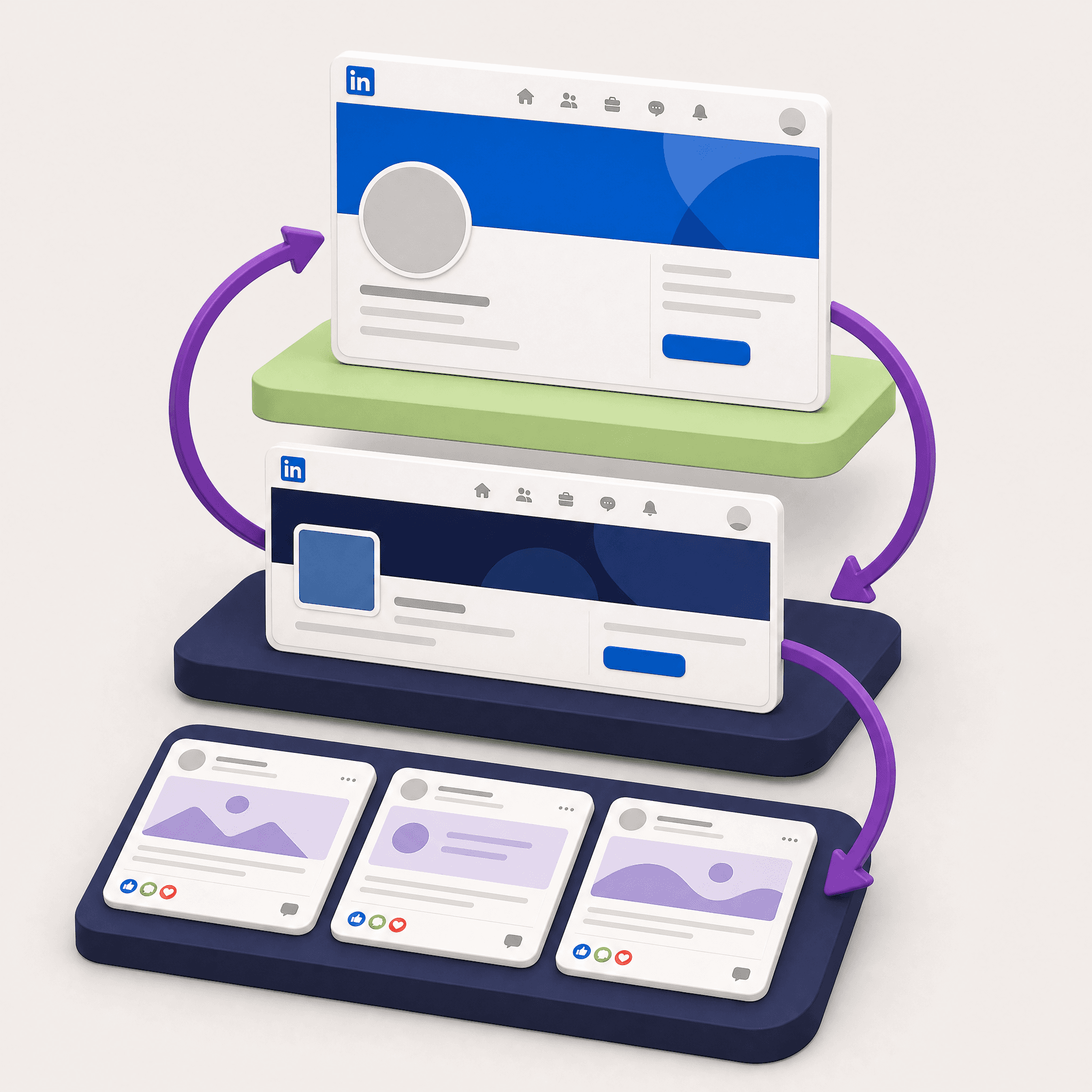
The three layers: CEO, company page, employees
The CEO or founder profile. This is where trust gets built. People follow people, and AI engines mostly cite people too (I covered that here). A strong CEO profile works as a landing page for their expertise, and here are profile examples that do exactly that.
The company page. Weak on organic reach, strong on credibility. Someone who noticed the CEO will check the page before they fill in a form, and it's also where your paid campaigns, newsletter and events live.
Employees. The layer most companies skip, which is odd, because it holds the biggest pool of reach. Every employee has their own network, and a post from an engineer or an account executive reaches people the company page will never meet. How much reach could an advocacy program add? I built an advocacy calculator that runs the numbers in a minute.
The layers only compound together: the CEO opens the door, employees widen the circle, and the page confirms there's a real company behind both.
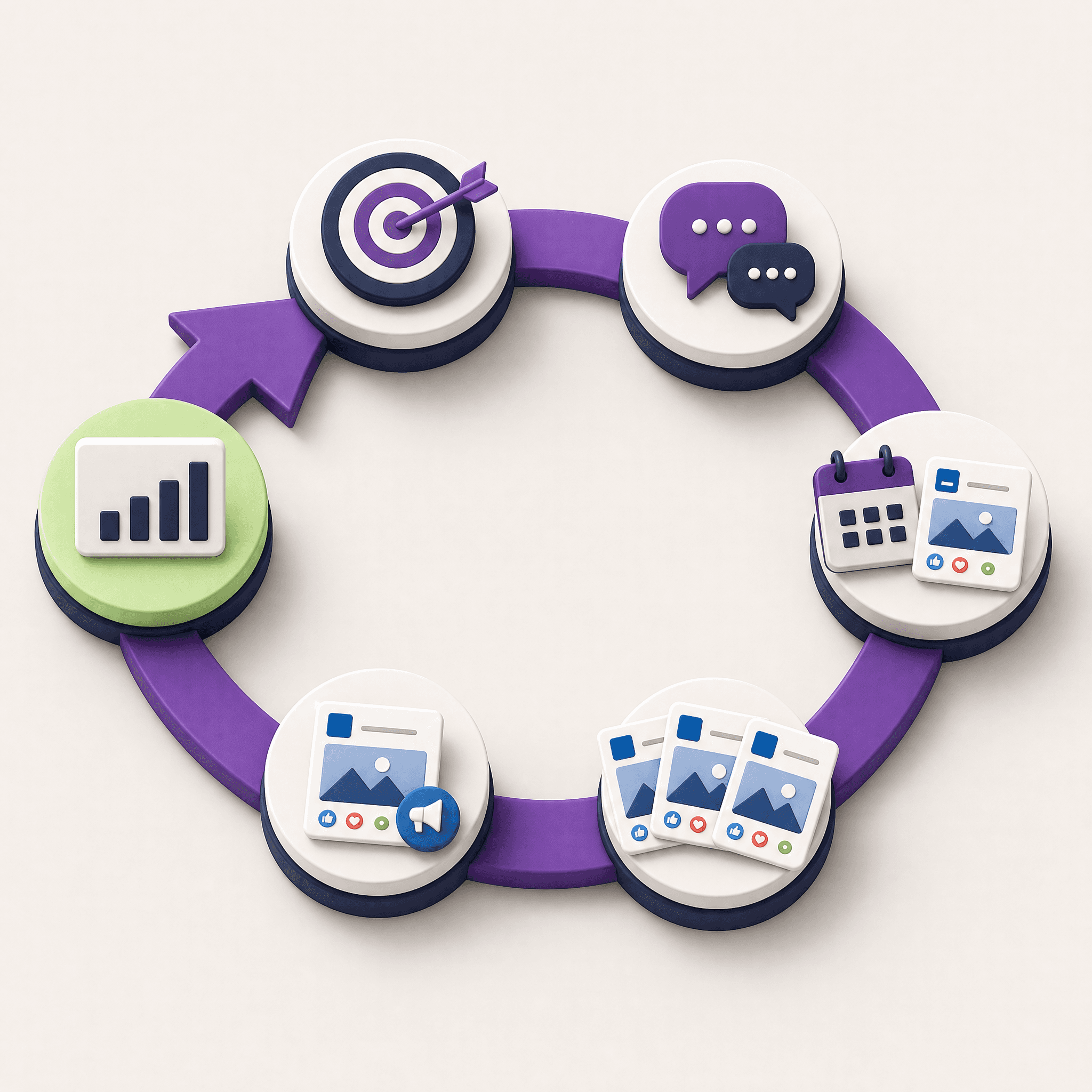
Building a LinkedIn B2B marketing system in six steps
This is the order I work in:
Define the ICP and buying group → pick content themes from the questions sales actually hears → set a steady CEO cadence → launch an employee advocacy program → put paid budget behind posts that already proved themselves → measure, and feed the decisions back into step one.
Buying group before content. Who signs, who influences, who can kill the deal. For a SaaS company selling into enterprises that's usually the CFO, the head of operations and the actual end users, and each of them needs to hear something different.
Content comes from sales. The questions that keep coming up on sales calls are next quarter's post list. And here's my less popular opinion: the posts that end up creating conversations usually have no call to action at all. A post that shows how to calculate something gets saved, gets sent to a manager, and comes back to you as an inbound message a month later. Turning LinkedIn into a real sales channel goes deeper on that handoff.
Cadence over volume. Two posts a week held for a full quarter beat ten posts in month one followed by silence.
Paid comes after organic. According to ZenABM's 2026 benchmarks, built on 161,256 LinkedIn ads from 211 B2B companies, Thought Leader Ads (ads that promote a person's post) averaged a 2.68% click-through rate at $2.29 per click, against 0.42% and $13.23 for standard single-image ads. ZenABM sells ABM software, so treat it as data from an interested party. Still, boosting a CEO post that already worked organically is one of the cheapest ways to buy attention from the right audience.
What changed for LinkedIn B2B marketing in 2026
On September 1, 2026, Social Media Today reported that LinkedIn detected 46% more instances of inauthentic activity in the first half of 2026 than in the second half of 2025. The targets: comments from engagement pods, automated posting services and cheap AI content. Add the AI slop report button and the direction is hard to miss.
For your system, that means every shortcut that worked two years ago (comment pods, automated comments, generic posts pasted out of a chat window) now costs reach. CEOs and employees who write in their own voice, with opinions and real experience, gain ground by comparison (AI-assisted writing included, and yes, this playbook discloses its own at the bottom). How much reach those accounts lost, LinkedIn hasn't published, and I won't guess.
There's an upside as well. Buffer, citing research by Profound, reports that LinkedIn is the most cited domain for professional queries across all six major AI platforms, including ChatGPT, Gemini and Copilot. A post that answers a real question keeps working long after the feed forgets it.
How to measure LinkedIn pipeline
Think of it as a four-rung ladder, fastest to slowest:
Saves and sends. Since September 2025 post analytics show how many times a post was saved and how many times it was sent in a private message. It's the first sign the content is useful to someone.
Profile views from your ICP. Are finance leaders at companies the right size visiting the CEO's profile?
Conversations. Inbound messages, comment threads that turn into DMs, and "I saw your post" in a discovery call.
Influenced pipeline. Deals where someone in the buying group engaged with the content before the first touch.
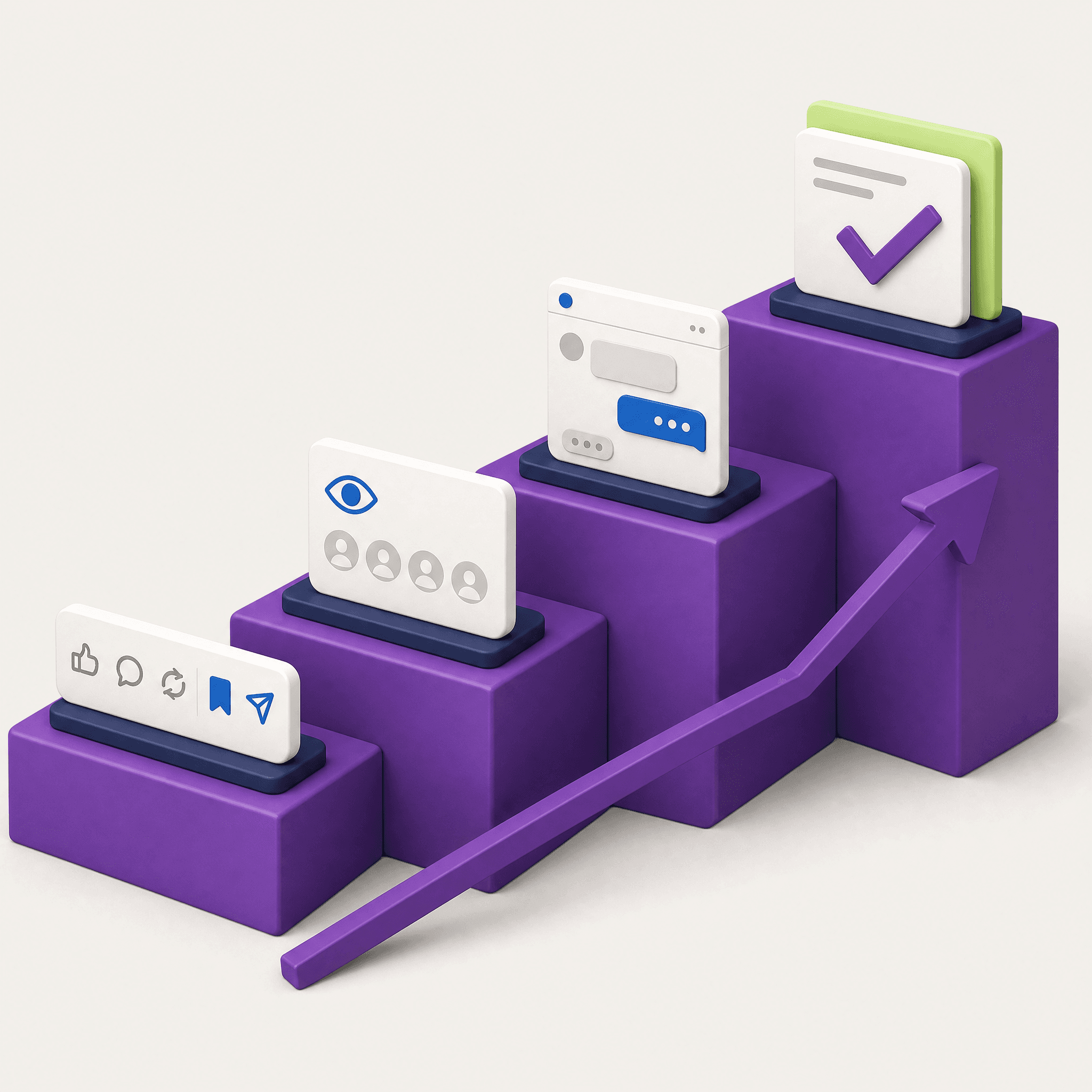
When I started this list I wanted meetings at the top. Then I thought about a company with a nine-month sales cycle: in its first quarter there's nothing to count on that rung yet, and the early rungs are what keep leadership patient until the deals show up.
In-house, a LinkedIn marketing agency, or outside help?
An in-house team works when someone has real time and owns the company's voice. A LinkedIn marketing agency makes sense when the main load is running paid campaigns at volume. An outside operator, like OctaLoom's LinkedIn Growth Engine or a fractional CMO, fits when you need strategy and execution from the same person, with no handoff in between.
Whichever you pick, ask one question before signing: who writes the CEO's posts, and how do you make sure they sound like the CEO?
Bottom line
LinkedIn pipeline comes from a three-layer system that runs over quarters, so judge it on the ladder above, quarter after quarter. Tomorrow morning, open the analytics for the CEO's last ten posts, sort by saves, and write the next post on whatever topic sits at the top.
And if 95% of your buyers aren't buying this year, what will they know about you when they start looking?
FAQ
What is LinkedIn B2B marketing?
It's the systematic management of a company's LinkedIn presence through three assets (the CEO's profile, the company page and employees' profiles) plus paid promotion and measurement. The goal is for the buying group to know and trust the company before they look for a vendor, and for that trust to turn into sales conversations.
Does LinkedIn work for B2B lead generation?
Yes, when it's measured correctly. In the Content Marketing Institute's 2026 research, 76% of B2B marketers ranked LinkedIn as the most effective channel for thought leadership. In the 2025 Edelman-LinkedIn report, 79% of respondents said they're more likely to champion a vendor in an RFP if it publishes quality thought leadership consistently.
How do you build a LinkedIn marketing strategy?
In six steps: define the ICP and buying group, pull content themes from sales conversations, set a steady CEO cadence, launch employee advocacy, put paid budget behind posts that already worked, and measure so the results shape the next round.
How long does LinkedIn B2B marketing take to show results?
Fast signals (saves, sends, profile views from your ICP) move within weeks. Conversations and deals take quarters, because according to the Ehrenberg-Bass Institute only about 5% of potential buyers are in market in any given quarter.
Organic or paid on LinkedIn?
Organic first, then paid behind what worked. According to ZenABM's 2026 benchmarks, Thought Leader Ads averaged a 2.68% click-through rate and $2.29 per click, versus 0.42% and $13.23 for single-image ads.
When should you hire a LinkedIn marketing agency?
When nobody inside has the time and voice to run the system, or when paid campaign volume is high. Before signing, ask who writes the CEO's posts and how they'll make sure those posts sound like the CEO.
Written by Hanita Yudovski, who runs LinkedIn programs for B2B companies, from the CEO's profile to employee advocacy, and helps independent professionals build their LinkedIn presence. LinkedIn is where she works every day, with AI agents and tools she builds herself. Updated September 2026. Written with AI tools, human strategy and human editing.
Sources: LinkedIn B2B Institute: the 95:5 rule · Ehrenberg-Bass Institute: 95% of B2B buyers are not in market · Demand Gen Report: 2025 Edelman-LinkedIn B2B Thought Leadership Impact Report · Content Marketing Institute: B2B trends for 2026 · ZenABM: LinkedIn ads benchmarks 2026 · Social Media Today: 46% rise in inauthentic activity · Buffer: AEO content workflow · Social Media Today: saves and sends in post analytics