בחזרה לבלוג←
מנועי ה-AI מצטטים את המנכ״ל ומדלגים על עמוד הלינקדאין של הארגון
חניתה יודובסקי


הפיד קונס תוכן גנרי, מנועי ה-AI מתעלמים מעמודי חברה. נשאר נכס אחד.
אמל”ק: חברת Meltwater ניתחה 9.5 מיליון ציטוטים של תוכן לינקדאין בתשובות של ChatGPT, Perplexity ו-Gemini, ו-75% מהם הגיעו מפרופילים אישיים. באותו שבוע לינקדאין אישרו שמעל מיליון אנשים לחצו על ״Seems like AI slop״, ופוסט שסומן מאבד בערך 40% מהחשיפה מחוץ לרשת. Search Engine Journal הראו חשיפה אורגנית שירדה 47% בשנה. Metricool מדדו 673 אלף פוסטים ומצאו שקרוסלה מקבלת יותר חשיפות מכל פורמט אחר, ששאלה ישירה מביאה 77% יותר תגובות, ושלינק בפוסט חותך 27% מהחשיפה בפרופיל אישי אבל מוסיף 51% בעמוד חברה. ובשקט, מדד ה-SSI כבר לא זמין בחשבון חינמי. בפנים: חמישה שינויים, ומה לעשות עם כל אחד השבוע.
השבוע נחתו אצלי שבעה מספרים חדשים מלינקדאין ומהסביבה שלה, וזה הרבה לשבוע אחד. בדרך כלל כל מספר כזה מספר סיפור אחר. הפעם, אחרי שסידרתי אותם לפי נושא, ראיתי שכולם, בלי יוצא מהכלל, מצביעים לאותו מקום.
הפיד מעניש תוכן שנשמע כמו כולם. מנועי ה-AI כמעט לא רואים עמודי חברה. ומה שנשאר בין שני הדברים האלה הוא פרופיל אישי עם קול שאפשר לזהות.
חמישה שינויים, לפי סדר חשיבות ולא לפי סדר כרונולוגי.
1. המספר של החודש: 75% מהציטוטים מפרופילים אישיים
ב-17 באוגוסט Meltwater פרסמו מחקר שניתח 9.5 מיליון ציטוטים של תוכן לינקדאין בתוך תשובות של מנועי AI. שלושה רבעים מהציטוטים האלה הגיעו מפרופילים אישיים (ציטוט, לצורך העניין, זה כשמנוע AI מביא פוסט או מאמר שלכם כמקור לתשובה שלו, בדרך כלל עם לינק). עמודי חברה כמעט לא מופיעים.
שימו לב מה זה אומר בפועל. כשמישהו שואל את ChatGPT ״מי מומחה שיווק ל-SaaS בתחום הסייבר״ או ״איך בונים תוכנית שגרירים לעובדים״, התשובה נבנית מפוסטים ומאמרים של אנשים, עם שם ופנים, וכמעט אף פעם ממה שכתב מנהל השיווק בשם המותג בעמוד החברה.
אני מלווה מנכ״לים ומייסדים, ולחלקם אני גם כותבת את הפוסטים (ghost writing), אז המספר הזה לא מפתיע אותי ודי הגיוני לי. דווקא בגלל זה בדקתי אותו פעמיים לפני שכתבתי אותו כאן. הוא מתיישב עם מה שראיתי ב-Semrush במרץ (89 אלף כתובות לינקדאין שצוטטו ב-AI, רובן פוסטים של אנשים) ועם ההנחיה הרשמית של לינקדאין מיוני, שדיברה על מאמרים ופוסטים מפרופילים אישיים ולא על עמודים.
הטענה הכי חזקה נגד: בלינקדאין יש הרבה יותר פרופילים אישיים מעמודי חברה, אז ברור שהם מצוטטים יותר. נכון. אבל גם אם מנרמלים לפי כמות תוכן, עמוד חברה שמפרסם שלוש פעמים בשבוע היה אמור להופיע איפשהו, והוא לא. ההטיה היא לא רק כמותית.
מה לעשות עכשיו: אם האסטרטגיה של הלקוח שלכם היא עמוד חברה בלבד, השבוע זה הרגע לפתוח את השיחה על הפרופיל של המנכ״ל. המספר הזה עושה את חצי העבודה בשבילכם. וזה לא חייב להיעצר במנכ״ל, גם פוסט של מהנדסת או של איש מכירות הוא פרופיל אישי שמנועי ה-AI רואים. כמה חשיפה תוכנית שגרירים כזאת יכולה להוסיף לחברה? יש לי מחשבון שגרירים שעושה את החשבון בדקה.
2. מיליון מדווחים, 40% פחות חשיפה, והתראה שלא הייתה קיימת
לפני שלושה שבועות כתבתי כאן שהכפתור ״Seems like AI slop״ מאמן מודלים ולא מוריד חשיפה. זה עדיין נכון, אבל עכשיו יש מספרים על הצד השני של המשוואה.
לינקדאין אישרו רשמית שמעל מיליון אנשים השתמשו בכפתור בשבועיים הראשונים. פוסטים שסומנו מקבלים בערך 40% פחות חשיפה מחוץ לרשת של המפרסם. הארי סריניוואסן (Hari Srinivasan), מנהל המוצר הראשי, הדגיש שדיווח בודד לא עושה כלום, צריך כמה דיווחים מצטברים.
והחלק שבאמת חדש: מי שהפוסט שלו סומן מקבל התראה פרטית בניתוחים, ״Some members told us this post seems like AI.״ עד עכשיו לא היה שום ערוץ שבו לינקדאין אומרת למפרסם מה הקהל חושב על הטקסט שלו. עכשיו יש, ואצל לקוחות זה הופך למדד שצריך לבדוק כמו כל מדד אחר.
זה נוגע גם לכסף. פוסט אורגני שנראה מיוצר על ידי AI נדחק עוד לפני שמקדמים אותו, ומודעת Thought Leader שמבוססת עליו פשוט תעבוד פחות טוב. איכות הפוסט המקורי הפכה לתנאי סף גם לתקציב הממומן.
מה לעשות עכשיו: לעבור על כל התוכן המתוזמן לשבועיים הקרובים ולסנן תבניות גנריות. מה ששורד את הפילטר: ניסיון ספציפי, שמות, מספרים, דעה. ואם ההתראה הזאת מופיעה אצל לקוח, זה סימן לעצור: הפוסט הבא נכתב מאפס, בלי התבנית שהביאה את הדיווח.
3. החשיפה האורגנית ירדה 47%, וההקלקות על פוסטים ירדו 42%
ב-19 באוגוסט Search Engine Journal פרסמו ניתוח של החשיפה בלינקדאין בשנה האחרונה, שנה שבה הפיד עבר למודל דירוג חדש שלומד מהפעולות של כל משתמש, כולל כמה זמן נשארים על פוסט. החשיפה האורגנית ירדה 47% שנה מול שנה, וההקלקות על פוסטים ירדו 42%. עמודי חברה נפגעו הכי קשה.
מדובר בשינוי מבני שממשיך להתגלגל, ועכשיו המספרים על השולחן. וכשמחברים אותו לסעיף 1 מקבלים תמונה עקבית: הפיד ומנועי ה-AI מתגמלים את אותו דבר, אדם ספציפי שיודע משהו ספציפי.
מה לעשות עכשיו: להפסיק להשוות חשיפות לשנה שעברה, ההשוואה הזאת כבר לא אומרת כלום. המדד שכדאי לעקוב אחריו במקום: עוקבים חדשים בשבוע ופניות פרטיות שמזכירות פוסט.
4. מה עובד עכשיו, לפי 673 אלף פוסטים
ב-Metricool השוו 673 אלף פוסטים מ-63 אלף חשבונות, תחילת 2025 מול תחילת 2026. כמה ממצאים שאני כבר מיישמת:
קרוסלות מובילות בחשיפות: 1,451 חשיפות לפוסט בממוצע, מול 605 לווידאו. בשיעור המעורבות מובילים דווקא פוסטים עם כמה תמונות, 3.71%, יותר מפי שניים מווידאו (1.80%) ומתמונה בודדת (1.81%).
שאלה ישירה בפוסט מביאה 77% יותר תגובות, קריאה מפורשת להגיב מביאה 80% יותר.
תגובות לפי פורמט: פוסט עם תמונה מקבל בממוצע 2.8 תגובות, קרוסלה 2.38.
״אינטראקציות בלתי נראות״, החלקה בקרוסלה ולחיצה על ״ראו עוד״, נספרות עכשיו במעורבות: ההקלקות לפוסט עלו ב-4.9% בשנה. הלייק הופך למדד חלש.
50% מהחשיפות מגיעות ב-48 השעות הראשונות, חלון השיא בין 9:00 ל-12:00.
והממצא שהפתיע אותי: לינק חיצוני. בפרופיל אישי לינק בגוף הפוסט חותך 27% מהחשיפה, אז עדיין לינק בתגובה הראשונה. בעמוד חברה לינק בפוסט דווקא מוסיף 51% חשיפות. הפוך לגמרי, וזה אומר שהכלל ״לינק בתגובה״ שכולנו משננים נכון רק לחצי מהנכסים שאנחנו מנהלים.
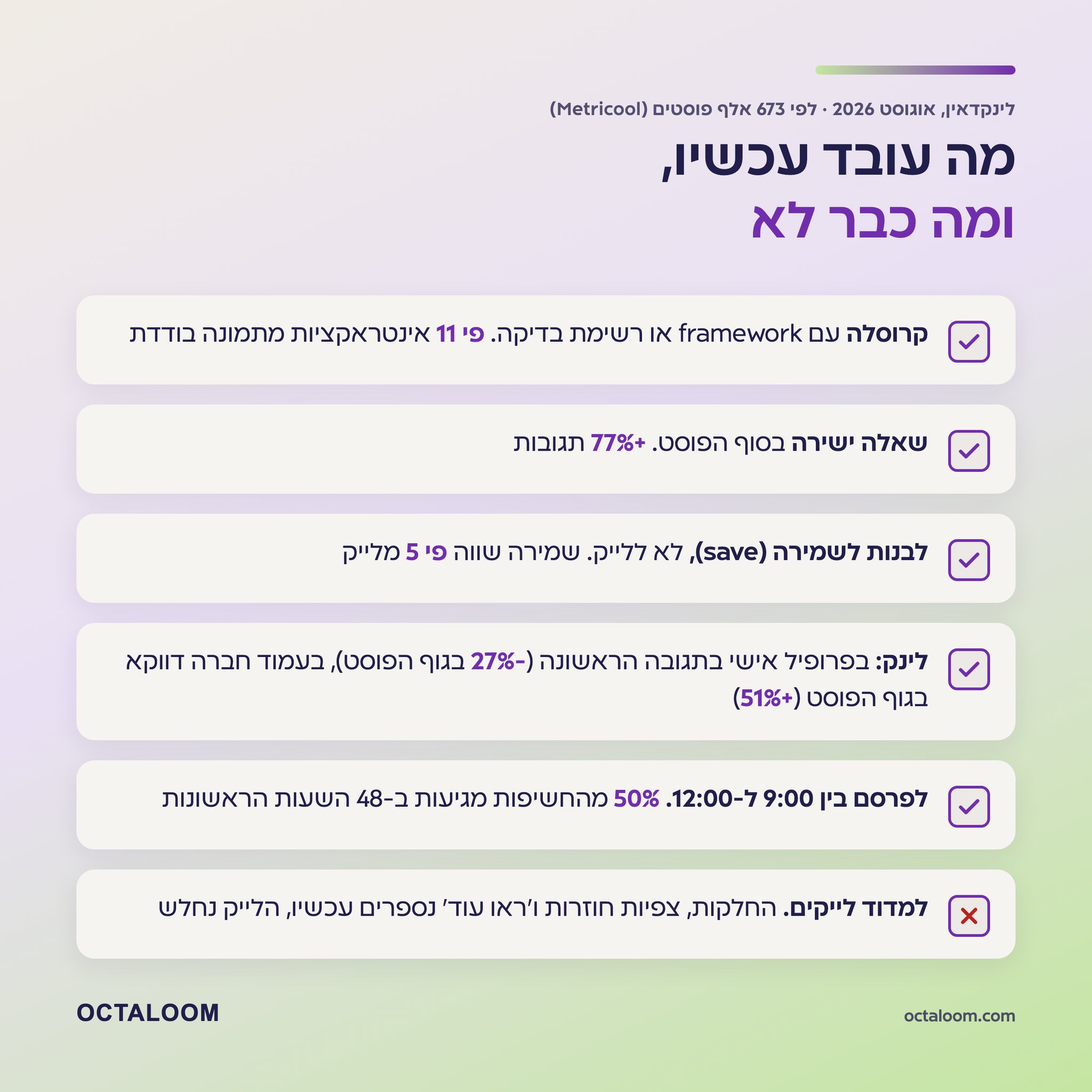
מה לעשות עכשיו: לבנות את הפוסט הבא כקרוסלה עם framework או רשימת בדיקה (משהו ששווה לשמור), שאלה ישירה בסוף, לינק בתגובה בפרופיל אישי ולינק בגוף הפוסט בעמוד חברה.
5. ארבעה עדכונים קטנים, ואחד שלינקדאין לא הכריזו עליו
קליפים אוטומטיים מאירועי לייב (AI Event Highlights) יצא לכל העולם ב-19 באוגוסט. המערכת מזהה רגעים חזקים בהקלטה של LinkedIn Live, הכרזות, ציטוטים, תובנות, ומציעה אותם כקליפים קצרים בתוך כלי ניהול האירוע. מי שמריץ לייב יכול להוציא 3-4 קליפים מהקלטה אחת בלי עריכה.
דירוג תגובות מותאם אישית ממשיך להתפרס. תגובות בפיד מסודרות לפי מידת הקשר לצופה ולא כרונולוגית, אז תגובה מאדם שהקורא מכיר שווה יותר להפצה מתגובה גנרית של זר. הרקע: זמן השהייה בתגובות עלה 18% בשנה.
ה-API של לינקדאין החליף גרסה. ב-17 באוגוסט לינקדאין סגרה את הגרסה הישנה (v202508) של ה-Marketing API, וכל כלי חיצוני שלא התעדכן בזמן, כלי תזמון, דאשבורד או מערכת קמפיינים, פשוט איבד את החיבור. אם משהו מהכלים שלכם מתנהג מוזר השבוע, לבדוק את זה לפני שמחפשים באג.
אירועי יוצרים בתשלום רצים עכשיו כפיילוט עם 50 יוצרים, בהמשך 1,000. בין המשתתפים קאסי קוזירקוב (Cassie Kozyrkov), קודי סאנצ׳ז (Codie Sanchez) וכריס דו (Chris Do). פירטתי את המודל במאמר ״לינקדאין בדרך להיות לקופה רושמת״, ההבדל הוא שביולי זה היה תוכנית ועכשיו זה קורה.
ועכשיו מה שלא הוכרז.
בסוף אוגוסט הופיעה בדף ה-SSI הודעה: ״Your access to the Social Selling Index (SSI) page will be discontinued soon. SSI is a Sales Navigator feature.״ מאז תחילת ספטמבר חשבונות חינמיים כבר לא רואים את הציון בכלל, ולינקדאין לא פרסמה על זה הודעה רשמית. ה-SSI מודד בעיקר כמה החשבון פעיל בלינקדאין, והרבה צוותים השתמשו בו כצילום מצב בתחילת תוכנית ובסופה. מי שצריכים אותו לדוחות צריכים עכשיו מנוי ל-Sales Navigator.

מה לעשות עכשיו: לבדוק שכל כלי מחובר עבר לגרסת API עדכנית, לעקוב אחרי SSI רק אצל לקוחות שיש להם Sales Navigator, ואם יש לייב מתוכנן, לנסות את הקליפים האוטומטיים.
השורה התחתונה
לינקדאין הפכה את הקהילה לחלק מהאלגוריתם. מיליון אנשים מסמנים תוכן גנרי, הפיד מוריד לו 40%, מנועי ה-AI מדלגים על עמודי חברה, ובמקביל הפלטפורמה מעבירה עוד מדד לחשבון בתשלום. הנכס היחיד שגם הפיד וגם ChatGPT מתגמלים השבוע הוא פרופיל אישי שכותב כמו בן אדם ספציפי.
אם ניהלתם עד היום רק עמוד חברה, איזה מספר מהמאמר הזה תיקחו לשיחה הבאה עם המנכ״ל?
נכתב על ידי חניתה יודובסקי, מנהלת מערכי לינקדאין של חברות B2B, מהפרופיל של המנכ״ל ועד תוכניות שגרירים לעובדים, ומלווה עצמאים לבניית הנוכחות שלהם בלינקדאין. לינקדאין היא המגרש שאני עובדת בו כל יום, וסוכני AI וכלים שאני בונה בעצמי הם דרך העבודה. עודכן באוגוסט 2026. התוכן נכתב בשילוב כלי AI עם אסטרטגיה ועריכה אנושית.
מקורות: Social Media Today: מיליון דיווחי AI slop · Slashdot: כפתור ה-AI slop · Search Engine Journal: חשיפה ירדה 47% · Social Media Today: מחקר Meltwater · Metricool: LinkedIn Trends 2026 · Social Media Today: AI Event Highlights · Social Media Today: דירוג תגובות · Microsoft Learn: Marketing API recent changes · Social Media Today: אירועי יוצרים