← Back to Blog


A personal brand that brings clients starts with one sentence other people can repeat.
TL;DR: LinkedIn personal branding that brings clients rests on four parts: one sentence people associate with you, a point of view you repeat, proof a buyer can check, and conversations with the right people. Metricool's 2026 study of 673,658 posts found personal profiles earn a 63% higher engagement rate than company pages (2.60% vs. 1.60%) while getting similar impressions per post. The difference is in comments, and that's where B2B sales conversations start.
Your personal brand is the sentence a buyer uses when a colleague asks, "Who should we talk to about this?" If that sentence comes out vague, no follower count and no viral post will turn into sales calls.
I'm Hanita Yudovski. I work with founders and CEOs on LinkedIn, and for some of them I ghostwrite the posts, so I have an obvious interest in convincing you this is worth the effort. In every new engagement the first thing I open is the profile, and I've covered its mechanics (headline, banner, About) in LinkedIn profile examples that bring clients. Here I move to the layer above: what you want to be remembered for, and how to make it stick.
What is personal branding on LinkedIn?
Personal branding on LinkedIn is the deliberate choice of what people connect with your name, and the consistent reinforcement of that connection through your profile, posts, comments and messages, so that when a buyer needs help in your field, yours is the first name that comes up.
In practice, you pick one problem and one audience, then keep writing about them until others start mentioning you in that context.
Why the personal profile, and what the numbers actually say
In April 2026, Metricool published a study of 673,658 LinkedIn posts from 63,108 accounts, comparing January and February 2025 with the same months in 2026 (Metricool sells social media software, so it has a stake in people posting more). The headline that traveled: personal profiles earn a 63% higher engagement rate than company pages, 2.60% vs. 1.60%.
The detail I find more useful got far less attention. In the same study, personal profiles and company pages reach roughly the same number of impressions per post. The gap shows up after the impression. According to Dragomir Stojkov's coverage for Net Influencer, posts from personal profiles get 237% more comments, while company page posts get shared nearly 15 times more. People pass a company's post along and reply to a person's, and in B2B a sales conversation usually opens with that reply or the message after it.
In the 2024 Edelman-LinkedIn B2B Thought Leadership Impact Report (roughly 3,500 respondents), 73% of decision-makers called thought leadership a more trustworthy basis for judging a company than its marketing materials, and 60% said it makes them willing to pay a premium. AI engines also mostly cite people, as I covered in the invisible company page piece.
The four parts of a LinkedIn personal brand that brings clients
I recommend building these in order, since each part leans on the one before it.
1. One sentence people associate with you
Before your next post, you should be able to finish this line: "When you need ___ for ___, you call..." The first blank is a specific problem, the second a specific audience.
"Marketing consulting for businesses" fits thousands of people, which is exactly why nobody remembers it. "Connecting old machines to new systems without replacing the production line" is a sentence a plant manager can repeat in a hallway. If a client couldn't say it in their own words, or needs three sentences to explain what you do, the sentence needs more work.
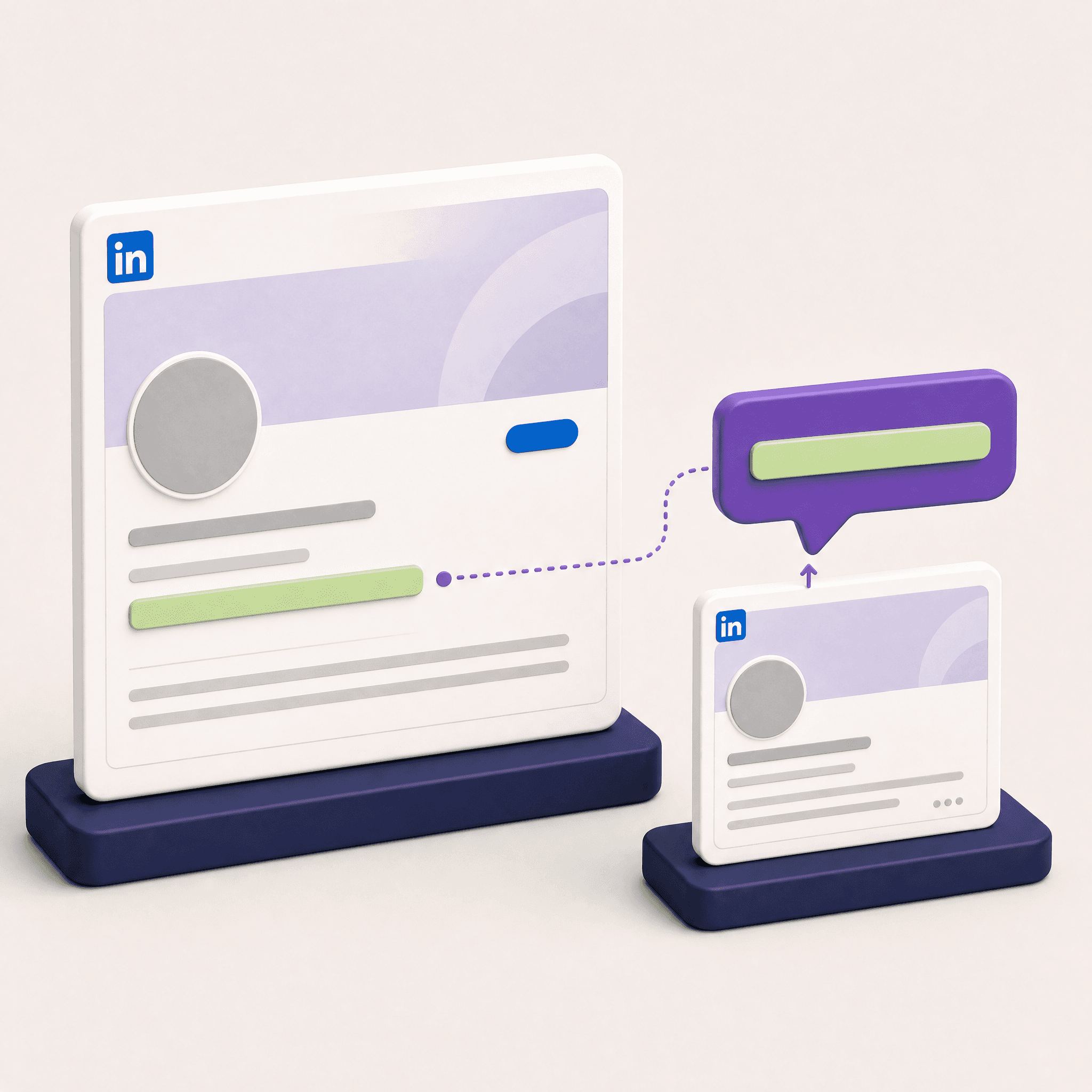
That sentence belongs in your headline. Write it in the language your buyers use (for many Israeli founders selling to the US, that's English; for local audiences, often Hebrew).
2. A point of view you repeat
Dozens of people share your expertise, and audiences remember whoever said something worth arguing with. Write down three positions you're willing to repeat for a full year, even after you're bored of them (and you'll be bored long before your audience is).
Each position can become an opinion post, a client story or a reaction to industry news. For how to structure each one, I took apart 28 posts.
3. Proof a buyer can check
An opinion without proof reads like one more inspirational post. Proof on LinkedIn is something a prospect can verify: a process shown step by step, a case study with the client's name (and permission), a written recommendation on your profile, or a mistake you made and what you changed afterward.
A post that walks through a process with real numbers is also the kind AI engines quote, as I explained in LinkedIn content strategy for founders.
4. Conversations
Per Metricool, the personal profile's edge is comments, so much of your personal branding happens outside your own posts:
A useful comment under someone else's post → a prospect clicks through to your profile → sees your last three posts on the same topic → sends a connection request or a message → an intro call.
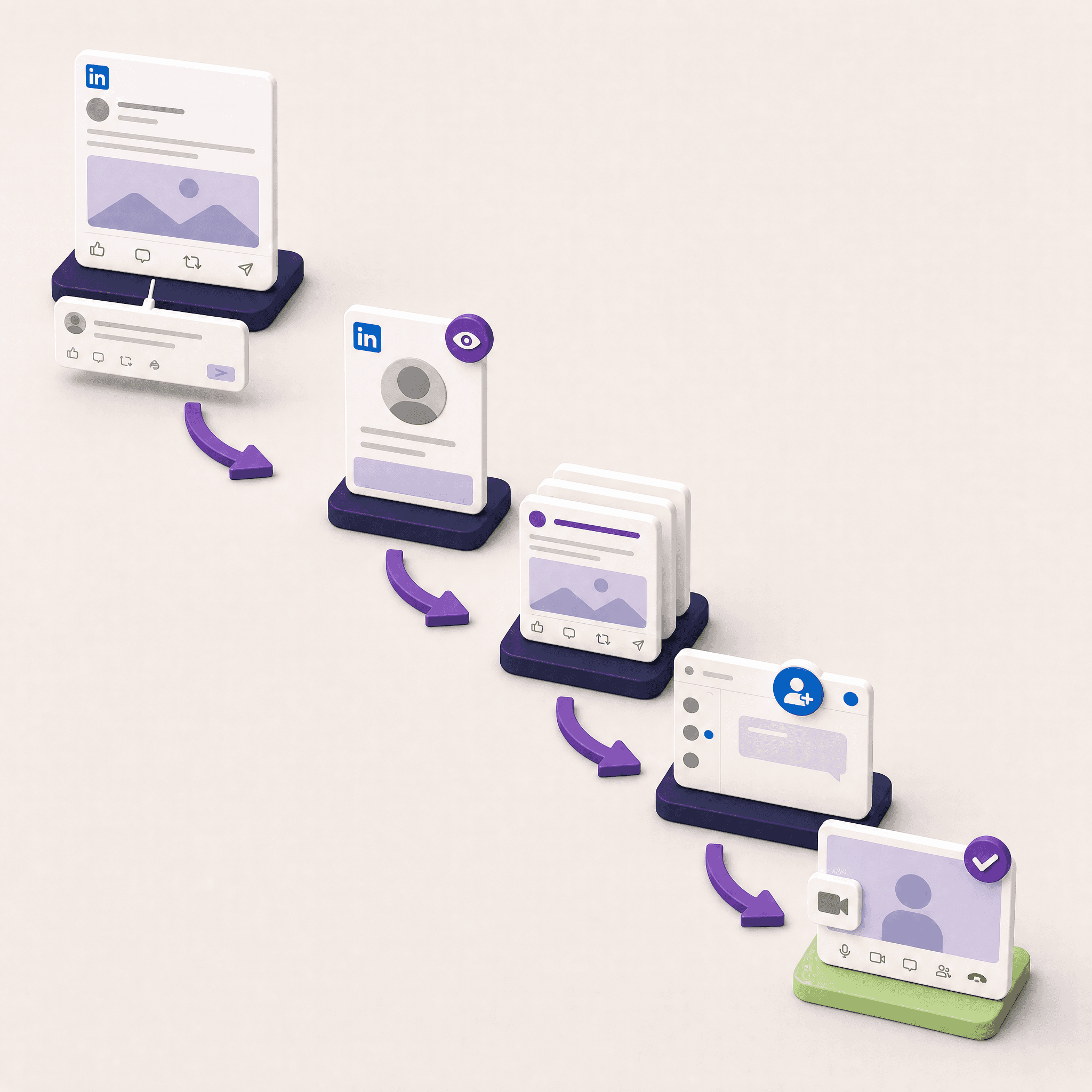
Most people working on LinkedIn personal branding count likes, which don't appear anywhere in that chain. Count the DMs that open with "I saw what you wrote about..." instead, because those become intro calls.
Personal branding beyond LinkedIn: conferences, speaking and meetings
A conference (say, Cybertech Tel Aviv, if you sell into security) mostly produces business cards that stay in your bag, unless you connect it to LinkedIn:
Before: a post on what you'll talk about or who you want to meet, so readers come find you.
During: conversations, plus a short list of names to follow up with.
After: a takeaways post tied to your sentence, and connection requests with context ("we talked by the booth about...") within a few days.
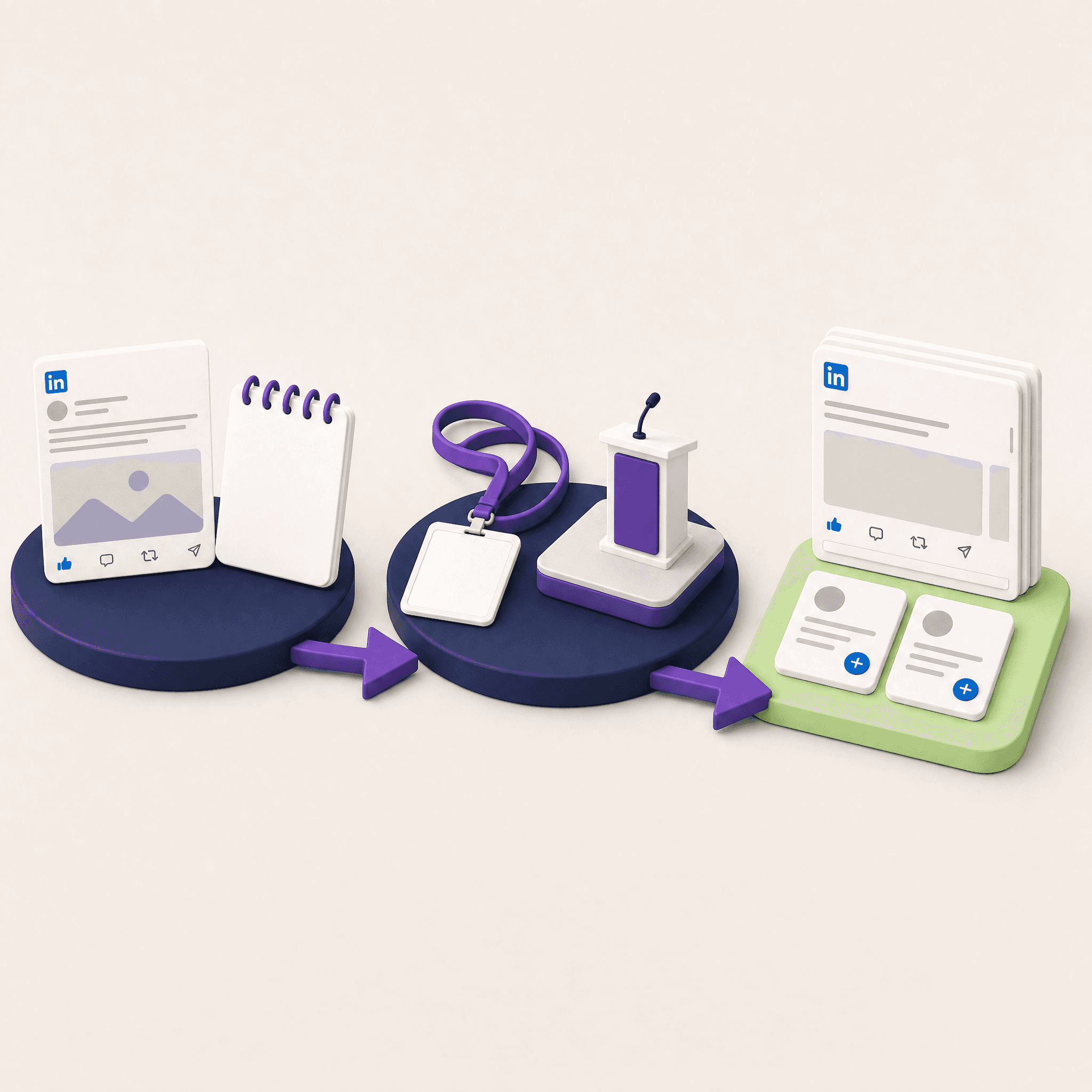
If you spoke, turn the slides into a document post and the recording into short clips. A twenty-minute talk can fill about a month of posts around the same sentence, reaching the people who weren't in the room.
Personal brand examples
For a real example, with name and screenshots, see Gal Shlomai's profile, a paid ads specialist who repositioned for an Israeli audience. The two below are composites I built for illustration:
A startup CFO-for-hire. Sentence: "Investor-ready financials, on time, for companies between seed and Series A." Position: founders spot the cash-flow gap three months too late. Proof: a monthly walkthrough of a sample cash-flow model.
An industrial integration CEO. Sentence: "Connecting old machines to new systems without replacing the production line." Position: Industry 4.0 projects stall on the factory floor before they reach the software. Proof: short videos from client plants, with permission.
Neither uses "passion" or "excellence," the words filling so many LinkedIn headlines.
Where personal brands break
The failure I see most is posting about everything: AI on Monday, team management on Wednesday, a conference selfie on Friday. Each post is fine on its own, but a month later nobody can say what you write about. Close behind: American templates that sound translated, and judging the effort by likes, which rewards the broad posts that bring the fewest conversations.
Inconsistent posting ranks lower on my list, since a steady cadence on scattered topics just blurs the sentence faster.
How to tell your LinkedIn personal branding is working
Five signals, from earliest to latest:
People tag you in comments when your topic comes up.
Profile views from the audience you chose (the right roles, industries and company sizes).
Inbound messages that mention a specific post.
Invitations to speak, guest on a podcast or write, on the subject of your sentence.
Sales calls that open with "I've been reading your posts for a while."
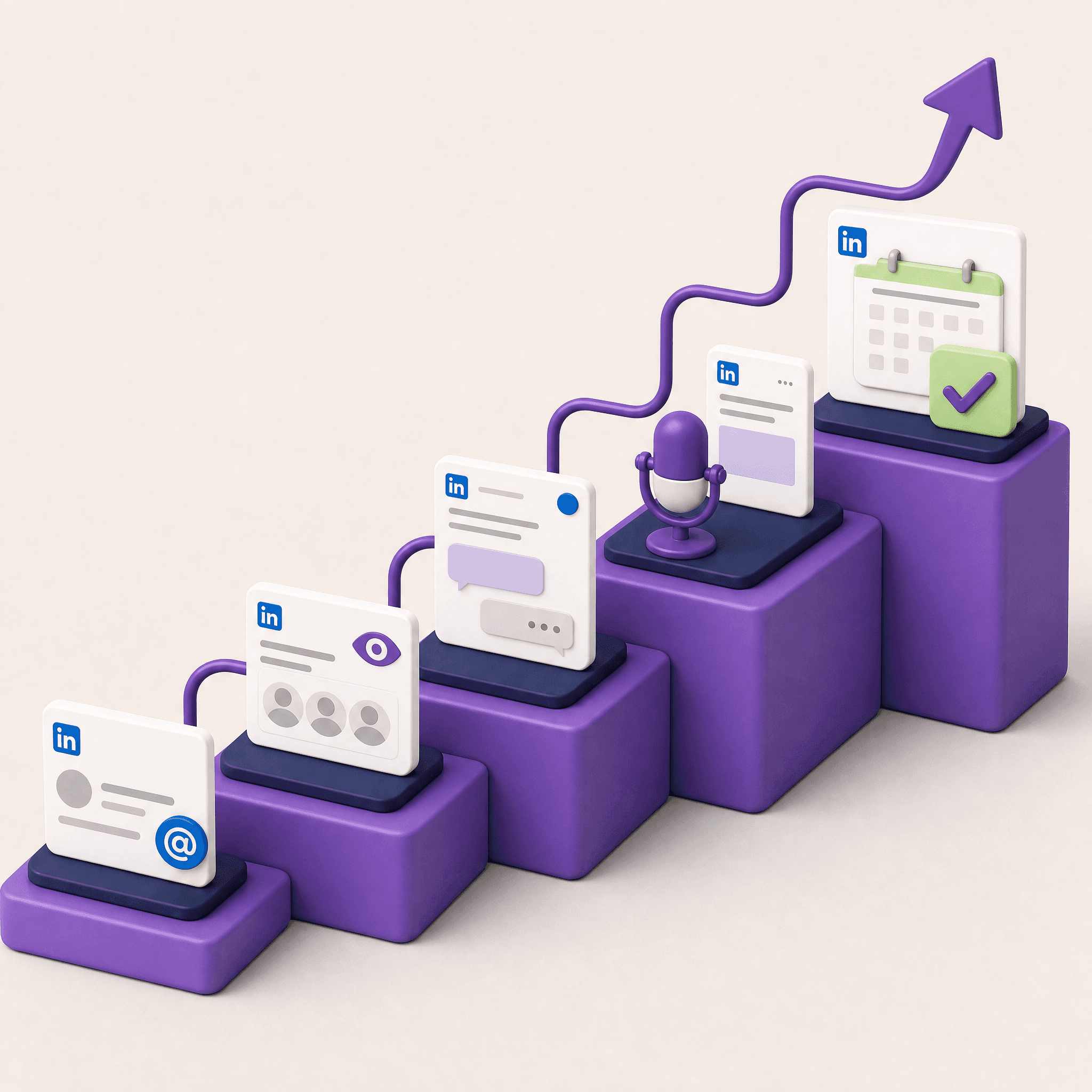
Early signals usually move within weeks, later ones over quarters. Anyone who promises a precise timeline without knowing what you sell, and to whom, is guessing.
DIY or a personal branding consultant?
You can build all four parts yourself, and the first one only you can write. Outside help makes sense when you have the sentence and the opinions but no time to write consistently, or when you need someone to tell you the sentence isn't sharp enough. That's what I do in LinkedIn for Executives and LinkedIn for Solopreneurs, so I have a stake here too.
Ask any consultant this in the first meeting: "A year from now, what do you think people will remember me for?" A generic answer after an hour together is a bad sign.
Bottom line
LinkedIn personal branding that brings clients starts with one sentence and a year of repeating it. Tomorrow morning, write "When you need ___ for ___, you call..." with your answer, send it to three current clients, and ask whether that's how they'd describe you.
What are your clients saying about you right now, when you're not in the room?
FAQ
What is personal branding on LinkedIn?
It's the deliberate choice of what people connect with your name, reinforced consistently through your profile, posts, comments and messages. The goal is that when a buyer needs help in your field, your name comes up first.
Why do personal LinkedIn profiles outperform company pages?
In Metricool's 2026 study of 673,658 posts, personal profiles had a 63% higher engagement rate (2.60% vs. 1.60%). Impressions per post were similar; the difference was in comments. Personal profiles start conversations, while company pages get shared more.
How do you build a LinkedIn personal brand that brings clients?
In four parts: one sentence that ties a specific problem to a specific audience, three positions you repeat for a year, proof a prospect can verify, and conversations in comments and DMs that lead to meetings.
How long does LinkedIn personal branding take to bring clients?
Early signals, like tags and profile views from your target audience, usually show up within weeks. Inbound messages and sales conversations take quarters and depend on what you sell and to whom.
How do conferences and speaking fit into a personal brand?
Connect them to LinkedIn: a post before the event, a list of people to follow up with during it, and a takeaways post plus context-rich connection requests afterward. A talk can become a document post and several short video clips.
When should you hire a personal branding consultant?
When you have the sentence and the opinions but not the time to write consistently, or when you need an outside eye to sharpen the sentence. In the first meeting, ask what they think people will remember you for a year from now.
Written by Hanita Yudovski, who runs LinkedIn programs for B2B companies, from the CEO's profile to employee advocacy, and helps independent professionals build their LinkedIn presence. LinkedIn is where she works every day, with AI agents and tools she builds herself. Updated September 2026. Written with AI tools, human strategy and human editing.
Sources: Metricool: 2026 LinkedIn study press release · Metricool: LinkedIn trends, 6 insights from the 2026 study · Net Influencer: LinkedIn engagement shifts toward clicks · Roo & Eve: 2024 Edelman B2B thought leadership report key takeaways · Cremarc: the Edelman 2024 thought leadership report