← Back to Blog


Vibe marketing without a human voice is exactly what LinkedIn now filters out.
TL;DR: Vibe marketing is a way of running marketing where AI supplies the speed, a human owns the strategy, and the content keeps the brand's real voice. All three have to be present: drop the strategy and you get fast noise, drop the voice and you get AI slop. The term grew out of Andrej Karpathy's "vibe coding" in 2025. In 2026 it became urgent, because LinkedIn reported a 46% rise in detected inauthentic activity and, since late July, has been limiting the reach of content its classifiers tag as AI slop.
When most people say "vibe marketing" right now, what they mean is "AI writes my marketing." That version happens to be the one LinkedIn spent this summer building filters against.
I have skin in this. Vibe marketing is how I describe the way OctaLoom works, so when the term gets flattened into "let ChatGPT handle it," my positioning gets flattened with it. I already wrote about what vibe marketing looks like in B2B. This piece is the definition itself, because that is where most of the confusion starts.
Vibe marketing, in one sentence
Vibe marketing is a way of working in which AI handles most of the repetitive execution at speed, a human holds the strategy and the decisions, and whatever gets published sounds like the actual people behind the brand.
averi.ai's guide, one of the most-read explainers on the topic, describes an approach where you set the strategy, give creative direction, and let AI systems execute. I agree with most of that. Where I part ways is emphasis: I put voice inside the definition as an equal third component, because in practice that is the part that breaks first.
The three layers, and what you get when one is missing
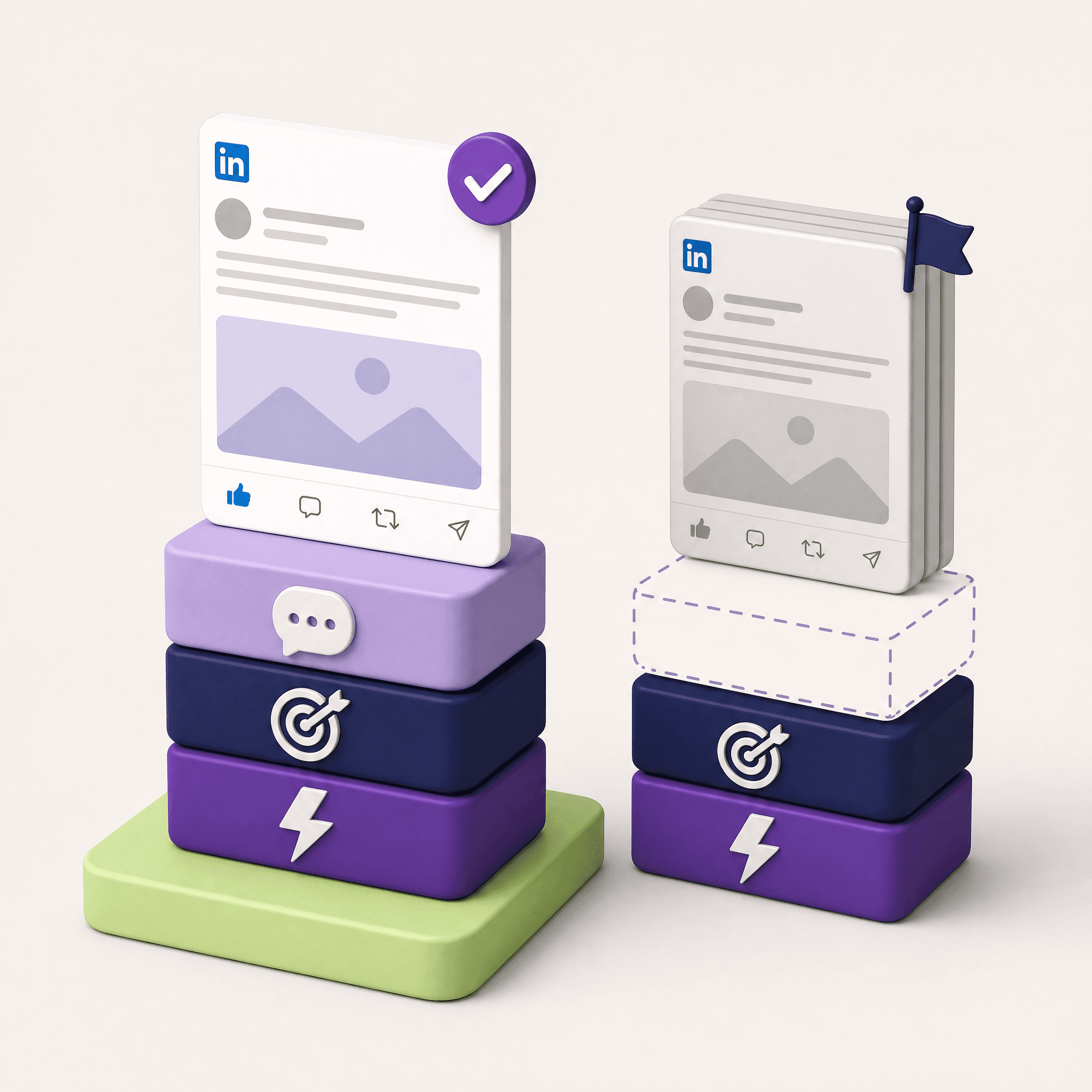
AI speed + human strategy + authentic voice = vibe marketing.
Take any one of them away and you are running a different system with the same label on it. Without the voice, you get AI slop: polished, on-brand-looking posts that read like everything else in the feed. Without the strategy, you get fast noise, twenty posts a week that never move a buyer closer to a decision. Without the speed, you are back to the classic agency model, quarterly cycles and an account manager relaying messages in both directions.
Voice is the easiest layer to cut, since no dashboard has a row for it. It is also the exact layer LinkedIn chose to police in 2026.
Where the name came from (short version)
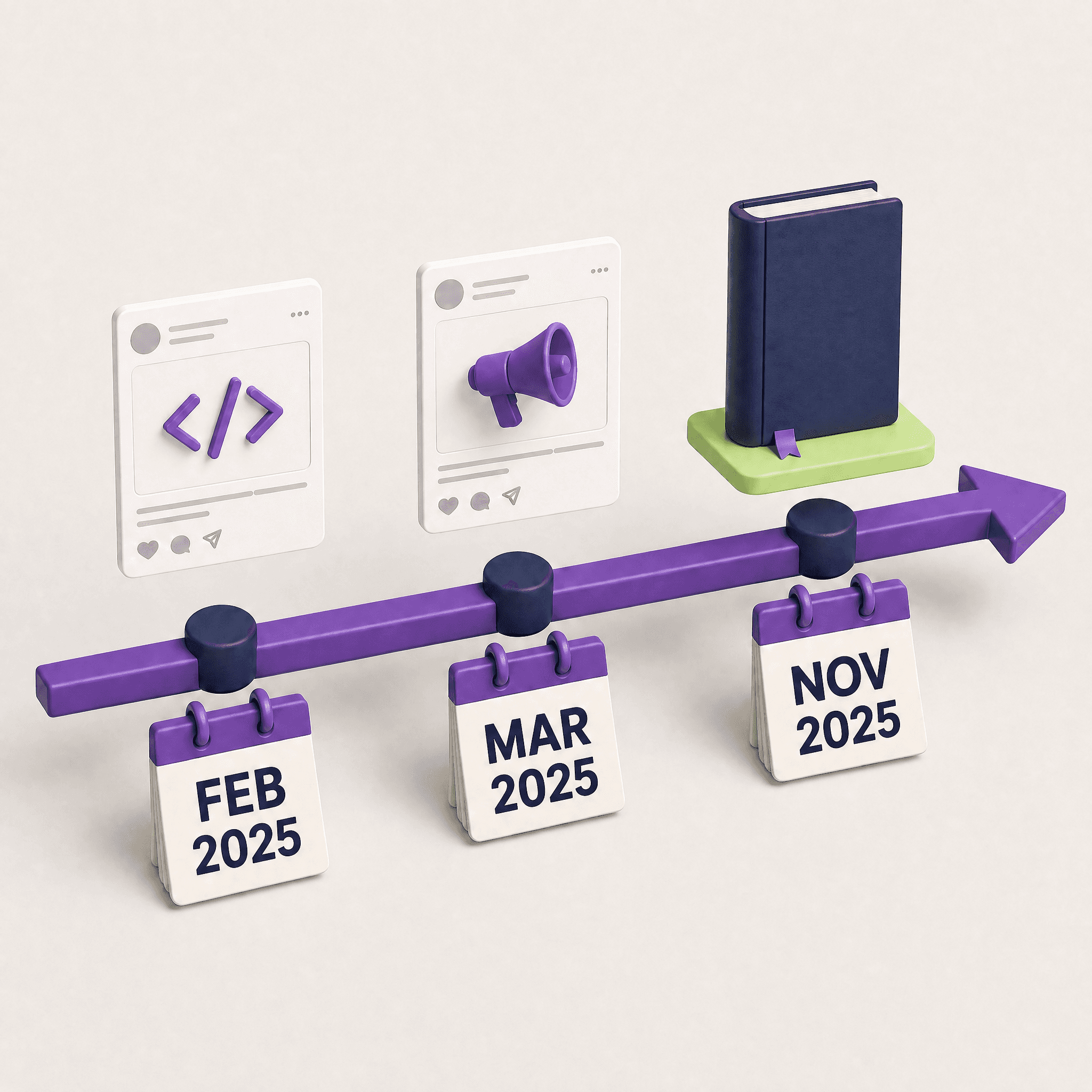
The timeline is tight. On February 2, 2025, Andrej Karpathy, an OpenAI co-founder and Tesla's former head of AI, posted about "vibe coding". On March 22, 2025, Greg Isenberg posted that the same acceleration vibe coding brought to software was hitting marketing teams, and called it VIBE MARKETING. By November 2025, Collins Dictionary had named "vibe coding" its Word of the Year.
According to averi.ai, the idea started earlier in a private Slack community, where James Dickerson was showing Isenberg automation workflows he had built. averi sells tools in this space, so read that origin story with some caution. The longer version is in my B2B piece.
One detail from Karpathy's original post rarely gets quoted: he wrote that he accepts every change and no longer reads the diffs. For a weekend side project, fine. In marketing, reading the draft is the step the whole method stands on.
Vibe marketing vs. "AI in marketing"
"AI in marketing" describes which tools are on the table. Vibe marketing describes how the work is divided between those tools and a person. Side by side, four models look like this:
Classic marketing department | AI in marketing (tools added) | Autopilot automation | Vibe marketing | |
|---|---|---|---|---|
Who decides what to say | Team and CMO | Same team | The prompt | One operator or a lean team |
Who drafts | Writers | Writers with an assistant | The machine | Agents, then a human edits |
Pace | Quarters | Weeks | Minutes | Days |
How it sounds | Like the brand | Like the brand, mostly | Like everyone | Like the brand |
Main risk | Slow and expensive | Tools that never change the process | Filtered reach, lost trust | Only as good as the person editing |
The last cell is the honest one. Vibe marketing is exactly as good as the human holding it.
What it looks like from the inside: how this article got written
The OctaLoom blog runs on a set of agents I built, and the article you are reading went through this exact route:
On Monday, an agent scans what happened on LinkedIn that week and writes me a brief → on Tuesday, a planning agent proposes four topics based on keyword data and that week's trend → I approve, change, or kill them → a writing agent drafts in Hebrew and English and runs voice, SEO and AEO checks → the drafts land in Google Docs for my edit → nothing goes live until I explicitly say yes.
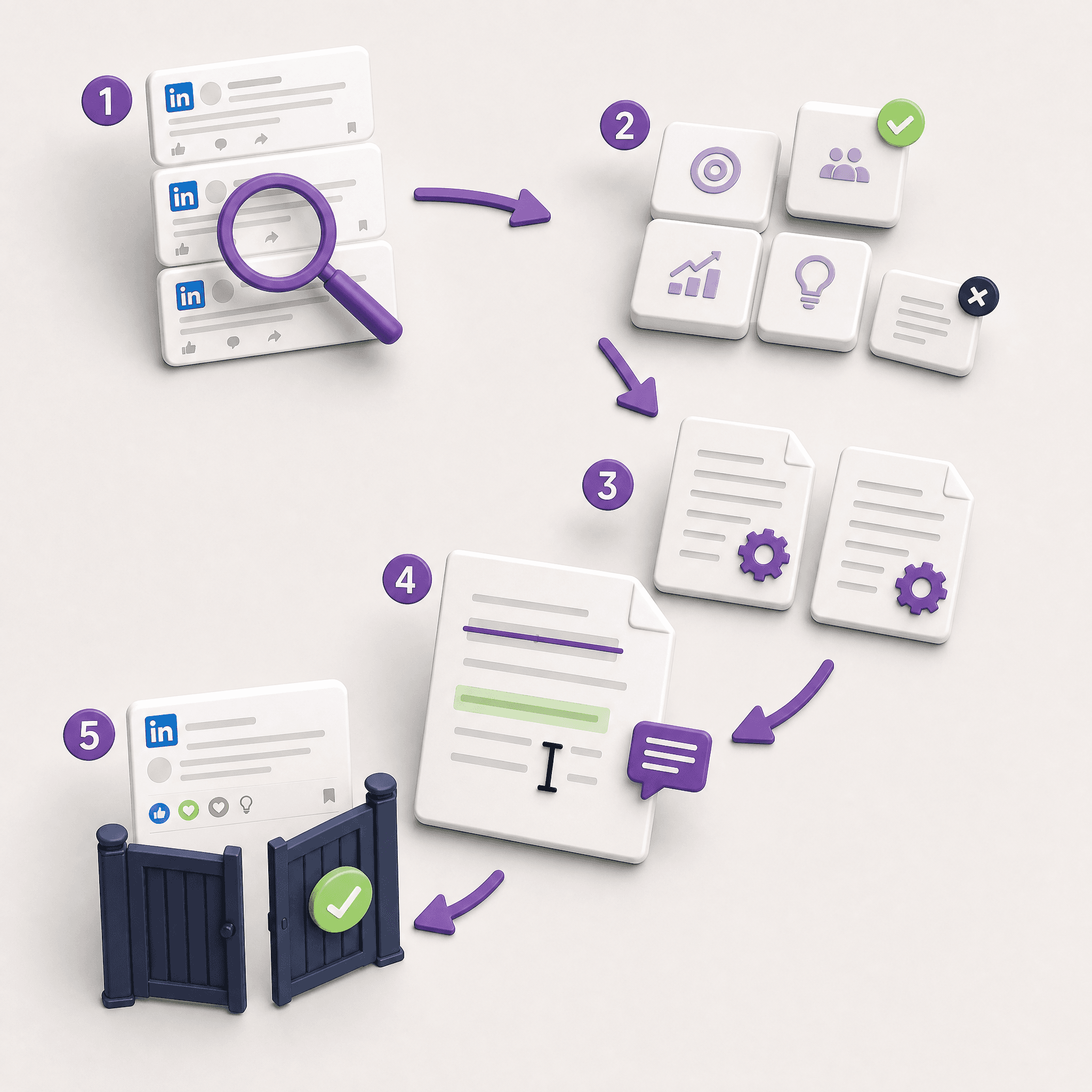
This week's brief recommended leaning into LinkedIn's AI slop enforcement. That is where this topic came from.
Here is the less flattering part. The very first article this system drafted, back in May 2026, got the definition of vibe marketing wrong. The term I build part of my positioning on, wrong, in a draft that looked ready to ship. I rewrote the definition by hand, added the origin story and sources, and then my Hebrew style rules (commas over choppy full stops, the Hebrew summary label instead of TL;DR) went into a file the agent reads on every run.
That one episode is the method in miniature. AI saved most of the drafting hours, and I caught the mistake that would have cost me credibility with anyone who knows the field.
I build the same kind of agents for clients (AI tools and agents), and if your real question is which tools you even need, I covered that in the marketing automation stack for 2026.
Why now: LinkedIn started filtering
Three things happened on LinkedIn over the past six weeks, and they point the same way.
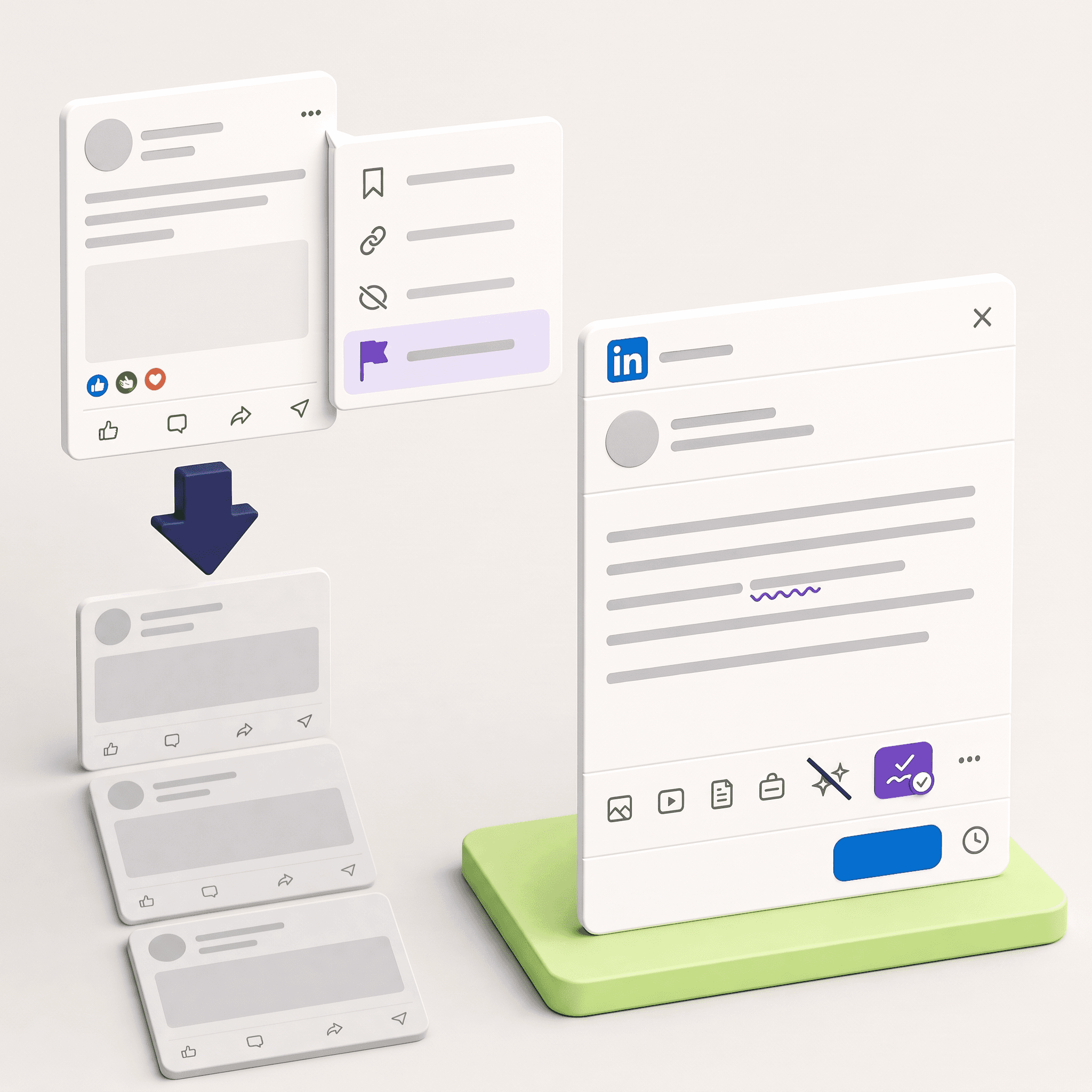
On July 30, 2026, LinkedIn added a "Seems like AI slop" option to the menu on posts and comments. In the same announcement, Chief Product Officer Hari Srinivasan described new classifiers that reduce AI slop in suggested content and in content from outside your network. He also drew a line worth keeping: many people refine their thoughts with AI, and that is a different thing from slop. I broke down how the reporting and the reach filter actually work in the AI slop button article.
That same announcement retired the composer's "Enhance your post" button, which generated alternative phrasings. Its replacement, in LinkedIn's words, proofreads your words without changing your voice.
Then on September 1, 2026, Social Media Today reported a 46% rise in detected instances of inauthentic activity on LinkedIn in the first half of 2026 compared with the second half of 2025. The targets: engagement pods, automated posting apps, and AI-generated content and comments.
My read is that this is good news for anyone doing vibe marketing properly. The filters are hunting for the missing layer, and the tool LinkedIn put in the composer instead of Enhance keeps your voice intact. LinkedIn is writing into code what I put into the definition.
I am not sure the classifiers will always get it right. A Stanford study found that AI detectors frequently flag writing by non-native English speakers as machine-generated, which should worry every Israeli founder posting on LinkedIn in English. A real voice lowers your risk, without making you immune.
Five questions to check whether it's vibe marketing or AI slop
Who picked the topic and the opinion in this post, a person or a prompt?
Is there something in it only you could write: a story, a number, a mistake, a client (with permission)?
Did someone read the draft end to end before publishing, and change something?
If you deleted your name from the post, could people still tell it's yours?
Did the time AI saved go into strategy, or into more posts?
If two of your answers are "a prompt" or "no," you are already on the slop side, however polished the post looks.
The bottom line
Vibe marketing is a division of labor: the machine sets the pace, a human sets the direction and the voice. In 2026, LinkedIn rewards the people who keep all three layers and filters the ones who dropped one.
Tomorrow morning, pull your last three posts and run them through the five questions. Which layer is missing in yours: the speed, the strategy, or the voice?
FAQ
What is vibe marketing?Vibe marketing is a way of running marketing where AI handles repetitive execution at speed, a human owns the strategy and decisions, and the content keeps the brand's real voice. The term emerged in 2025 as an extension of "vibe coding" into marketing.
Who coined the term vibe marketing?"Vibe coding" comes from a February 2025 post by Andrej Karpathy. Greg Isenberg applied it to marketing in a March 2025 post, and according to averi.ai the idea grew out of automation workflows James Dickerson showed him in a private Slack community.
What is the difference between vibe marketing and AI in marketing?"AI in marketing" means adding AI tools without necessarily changing who decides or who writes. Vibe marketing is a specific division of labor: AI agents execute, a human sets strategy and edits, output ships in days and still sounds like the brand.
Does LinkedIn penalize content written with AI?LinkedIn limits the reach of content its classifiers tag as AI slop, mainly in suggested content and outside your network. Chief Product Officer Hari Srinivasan wrote that refining thoughts with AI is different from slop, and the composer's new tool corrects writing while keeping your voice.
What are the three layers of vibe marketing?AI speed, human strategy and authentic voice. Without voice you get AI slop, without strategy you get fast noise, and without speed you are back to an agency or department working in quarterly cycles.
How do you start with vibe marketing?Start with the decisions that stay human: audience, point of view and message. Then hand AI the repetitive work, like research, variations and scheduling, and make it a rule that every draft is read and edited before it goes out. Check each post against the five questions.
Written by Hanita Yudovski. I run LinkedIn systems for B2B companies, from the CEO's profile to employee advocacy programs, and help independents build their presence on LinkedIn. LinkedIn is the field I work in every day, and the AI agents and tools I build myself are how the work gets done. Updated September 2026. This article was produced with the AI agent system it describes, with human strategy and editing.
Sources: Andrej Karpathy: the "vibe coding" post, Feb 2025 · Greg Isenberg: the VIBE MARKETING post, Mar 2025 · Collins Dictionary: Word of the Year 2025 · averi.ai: What Is Vibe Marketing · TechCrunch: LinkedIn's AI slop button, Jul 2026 · Hari Srinivasan's LinkedIn announcement · Social Media Today: LinkedIn's push against inauthentic activity, Sep 2026 · Liang et al., Stanford: AI detectors biased against non-native English writers