← Back to Blog


The "job site" where 4 out of 5 members influence purchase decisions. Explained from scratch.
TL;DR: LinkedIn is the world's largest professional network, owned by Microsoft since December 2016, with more than 1 billion members in 200+ countries. Most founders still file it under "job site," which is how they miss the part that pays: by LinkedIn's own audience data, 4 out of 5 members influence business decisions at their company. Below: who owns it, how many people are actually there, how the feed decides what you see (in plain words), why a personal profile beats a company page, and the first five steps for a B2B founder in 2026.
LinkedIn is a professional social network where people publish their work history, connect with colleagues and customers, post and read content, and look for or offer jobs. In practice, in 2026, it is where managers and decision-makers spend reading time every week, which makes it a B2B marketing and sales channel first and a job board second.
That is the definition. Now let me make it useful.
What LinkedIn is in two lines (and what it is not)
When I ask a founder "what is LinkedIn to you," the answer almost always starts with "where people look for jobs." True, and it is the old story. Today's LinkedIn feed looks like any other feed: posts, images, carousels, video, comments, direct messages. The one difference, and it is the difference that matters, is who is sitting on the other side of the screen.
On Facebook and Instagram, people show up to switch off. On LinkedIn, they show up wearing their work hat, with a title, a company and a budget attached. A head of procurement reading a post about inventory software is not stumbling on it between a cat video and a recipe. She reads it in the same state of mind she reads a vendor email.
Who owns LinkedIn and where it came from
LinkedIn started in Reid Hoffman's living room in 2002 and launched officially on May 5, 2003, according to the company's own About page. For 13 years it was an independent, publicly traded company with three revenue lines: recruiting tools, advertising, and premium subscriptions.
On June 13, 2016, Microsoft announced it was buying LinkedIn for $26.2 billion ($196 per share, all cash), and the deal closed in December 2016 after European regulators signed off. Since then LinkedIn has been a division inside Microsoft with its own brand and leadership, which explains a few things you see in the product: the Outlook and Dynamics hooks, the AI features landing in the profile and the feed, and the budget behind the model that ranks your posts (more on that in a minute).
Why does ownership matter to a founder? Because a Microsoft-owned platform does not vanish in two years. Whatever you build on your profile sits on stable ground, unlike networks that spike and fade (remember Clubhouse?).
How many people are actually there
LinkedIn says it has more than 1 billion members across 200+ countries and territories. Registered members and active users are different numbers, and LinkedIn does not publish an official monthly-active figure, so I stick with the number the company is willing to put its name on.
The part that matters for you is not the billion. It is the slice of that billion who buy what you sell. In Israel, where most of my clients are, LinkedIn's own ad-reach data (compiled by NapoleonCat) showed 2,947,000 users in July 2026, roughly 30.7% of the population, with 25 to 34 as the largest age group. Run the same query for your own market and you will find the same pattern: a third of the working population, concentrated in exactly the roles that sign B2B contracts.
Plenty of those accounts are dormant, and even so, the ones that log in weekly are more decision-makers in one place than any conference or email list you could build on your own.
How the feed works, in plain words
Until 2025, LinkedIn ranked your feed with a chain of dozens of small models, each predicting one thing (a like, a comment, a click). In 2025 the company replaced them with a single 150-billion-parameter language model called 360Brew, which reads the post and the reader's history as text and decides what to show to whom. LinkedIn documented it in a paper on arXiv in January 2025.
What that means for someone just starting out:
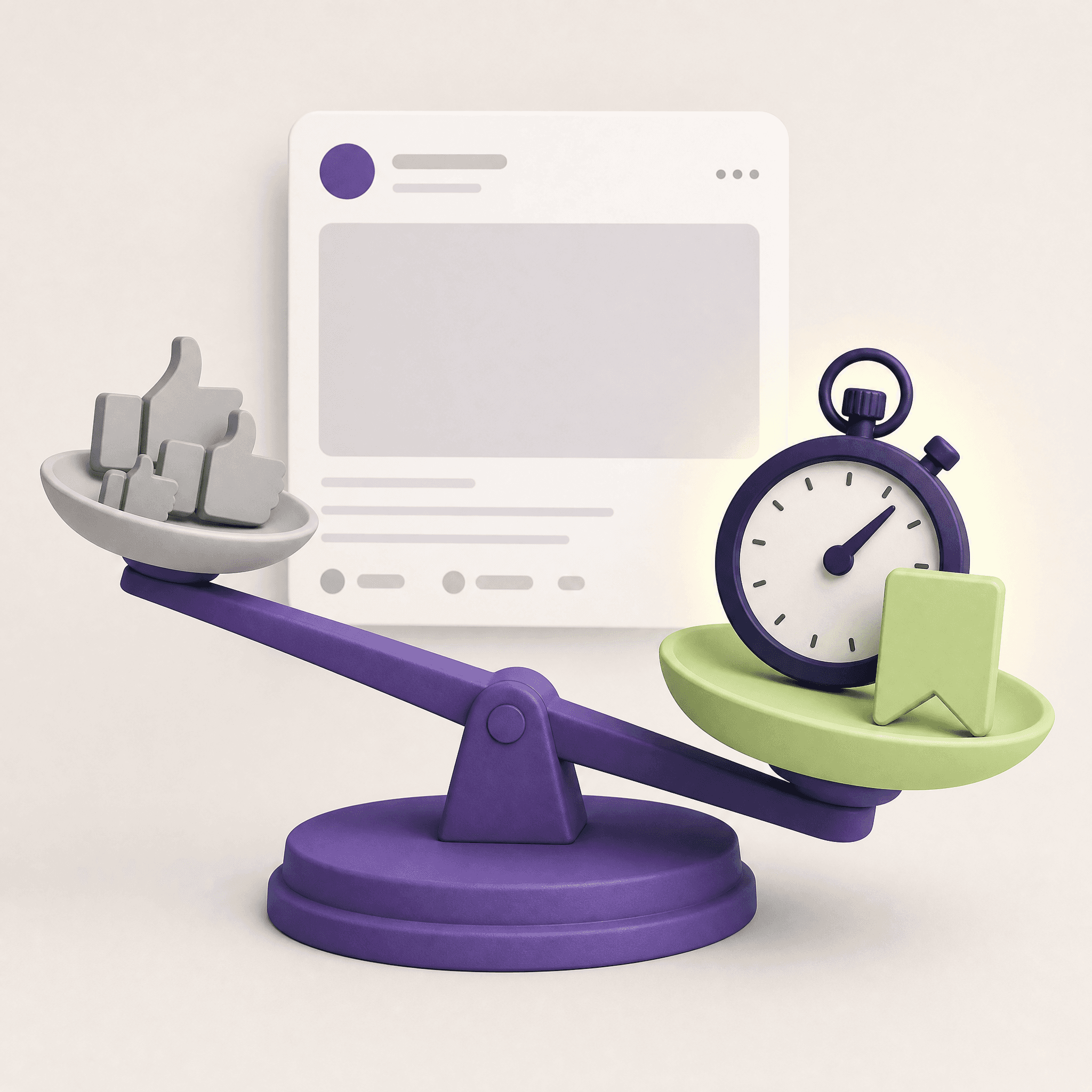
The feed measures how long people stay on a post (dwell time) and whether they save it, more than how many likes it got. A post that makes people stop and read beats a post that makes them tap a heart and scroll.
The model sorts every profile into a topic based on what it posted in recent weeks. Write about cybersecurity today, your Thailand trip tomorrow and hiring the day after, and the system gets confused and shows all three to fewer people.
An external link in the body of a post from a personal profile lowers reach, which is where the "link in the first comment" habit comes from.
Since July 2026 there is also a "Seems like AI slop" option readers can tap, and posts flagged enough times lose distribution outside the author's network. I covered that one in detail when it shipped.
The feed, bottom line, rewards a specific person writing about a specific topic in a voice you can recognize. Which leads straight to the next question.
Personal profile vs company page
The first mistake I see at almost every company that joins LinkedIn: open a company page, upload the logo, post "We're excited to announce" twice, wait. Two months later there are 40 followers, half of them employees, and a conclusion: "LinkedIn doesn't work for us."
A company page is a legitimate asset. It gives credibility to anyone checking you out, it is the base for paid campaigns, and without it employees cannot attach themselves to the organization. As an organic reach engine, though, it is weak, because the feed is built around people. People follow people, comment on people, and message people.
The CEO's or founder's personal profile is where the first post gets 2,000 impressions instead of 90. I work with CEOs and founders, and for some of them I also write the posts (ghost writing), and my order never changes: personal profile first, company page second, employee advocacy program third. Reverse that and you lose a year.
Why B2B decision-makers are there, specifically
LinkedIn cites its own Audience 360 study for the claim that 4 out of 5 members drive business decisions at their organization, with twice the buying power of the average web audience. It is the platform grading itself, so take it with some salt, but it matches what you see in any profile you actually run.
A more independent source: the 2024 Edelman-LinkedIn B2B Thought Leadership Impact Report found that 73% of B2B decision-makers trust a company's thought leadership more than its marketing materials and product sheets, and 75% say such content made them research a product or service they had not been considering.
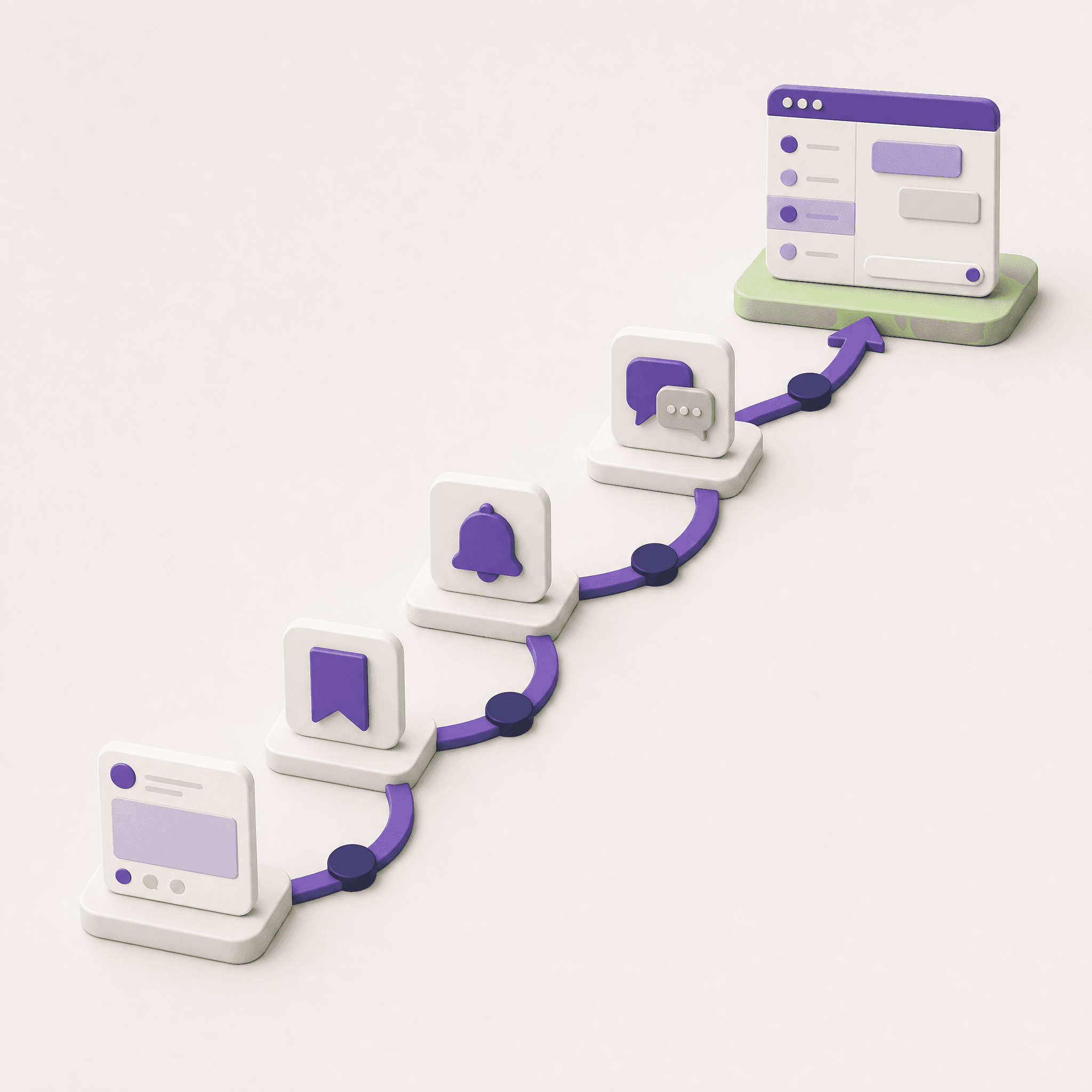
Put the two numbers together and you get the journey I watch clients go through every week: a post from the CEO → someone saves it → after three more posts they follow → on post six they comment → two weeks later a DM arrives, "Saw you do X, can we talk?"
Not one step of that happened on the company page, and not one step happened because of a link to the website.
LinkedIn for beginners: the first five steps
If you searched "LinkedIn for beginners" and landed here, this is your section. Five steps, in this order, no skipping.
Open a personal profile, not a company page. A clear photo of your face (a logo is not a face), your full name, and a banner image that says what you do.
Write a headline that says who you help and how, instead of your job title. "CEO at X" tells a buyer nothing. "Helping retail chains cut inventory shrink" tells them everything.
Fill the About section in first person, three to five short paragraphs: the problem you solve, for whom, and what you have done so far. No "passionate," no "results-driven."
Connect with 50 people you actually know: customers, partners, former colleagues. A short note with the request, no pitch. Your first network decides who the feed shows your first posts to.
Publish one post a week for eight weeks, on one topic, from real experience. Something that happened with a customer this week and what you took from it. Eight weeks is roughly how long the feed needs to figure out who you are.
What not to do at this stage: send a sales message to someone who accepted your connection a minute ago, buy followers, or post the same thing on the company page and the profile on the same day. What LinkedIn changed in the feed this year, I update here every month.
Bottom line: LinkedIn is a sales channel, not social
There is an argument that comes up in every kickoff I run. "We don't do social, we're B2B." I agree, mostly. Social, in the sense of light content that stacks up likes, genuinely does not fit most B2B companies, and I never tell a client to dance on Reels.
LinkedIn is a different thing. It is the list of decision-makers in your market, sorted by title, company and company size, with a feed that lets you show up in front of them every week without paying per appearance, and an inbox that lands directly with the person. That is a sales channel. It just happens to look like a social network.
That is exactly what I build at OctaLoom: LinkedIn as a growth engine for B2B companies, from the CEO's profile to an employee advocacy program, with AI agents I build myself so the system keeps running when the CEO has no time.
What to do tomorrow morning: open your own profile, read the headline, and ask whether a prospect understands within three seconds what you can do for them.
And if they don't, what do they understand?
FAQ
What is LinkedIn, in short? LinkedIn is a professional social network where people present their work experience, connect with other professionals, publish and read business content, and look for or offer jobs. For B2B companies it works mainly as a marketing and sales channel to decision-makers.
Who owns LinkedIn? Microsoft. The acquisition was announced in June 2016 at $26.2 billion and completed in December 2016. LinkedIn was founded in 2003 by Reid Hoffman and co-founders.
How many users does LinkedIn have? According to LinkedIn, more than 1 billion members in over 200 countries and territories. LinkedIn does not publish an official monthly-active-user figure.
Is LinkedIn free or paid? A basic profile, connections, posting and messaging your connections are free. Premium subscriptions, Sales Navigator, Recruiter and sponsored campaigns are paid. For a company just starting, the free account is enough for the first year.
Which is better for a business, a personal profile or a company page? Start with the CEO's or founder's personal profile, because LinkedIn's feed distributes content from people far more than content from pages. Open the company page afterwards, as a credibility asset and the base for paid advertising.
How do I start on LinkedIn as a beginner? A personal profile with a face photo, a headline that says who you help and how, an About section in first person, 50 first connections you actually know, and one post a week on one topic for eight weeks.
Sources
Microsoft News, Microsoft to acquire LinkedIn, June 13, 2016
TechCrunch, Microsoft officially closes its $26.2B acquisition of LinkedIn, December 8, 2016
NapoleonCat, Social Media Users in Israel (LinkedIn, July 2026)
LinkedIn Marketing Solutions, Generate Leads (4 out of 5 members drive business decisions) Hanita Yudovski runs LinkedIn systems for B2B companies, from the CEO's profile to employee advocacy programs, and works with solo founders on their LinkedIn presence. Updated: August 2026.